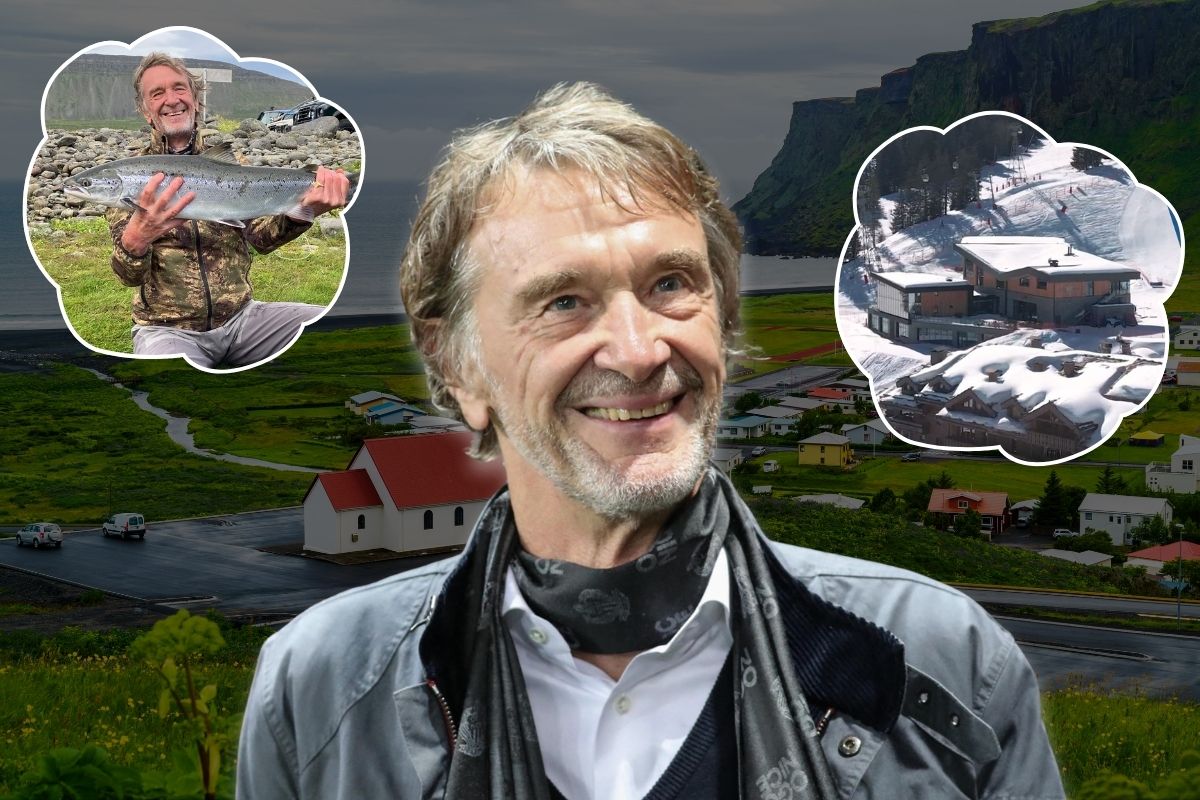
When you think of Iceland, most people imagine jagged glaciers, steaming lagoons, and that open, lonely feeling at the edge of the map. But these days, another topic keeps coming up in Reykjavík cafés and in far-off farm communities in the Northeast. The talk isn’t about storms or volcano alerts. It’s about the ground itself and the rivers running through it.
There’s a real tension in the background. Not loud, not dramatic, but serious. It comes down to a pull between national heritage and global money. On one side stands a country with deep roots and a long memory tied to its land. And on the other side, a few of the wealthiest buyers in the world are looking toward one of Europe’s last stretches of open, undeveloped wilderness.
So here’s the straight answer to the question people keep circling back to: who is the largest landowner in Iceland? If the measure is total acreage, it’s the Icelandic State. That part is clear. But that’s not what most people are really getting at when they ask. The real curiosity sits around the “Greenland of the North”, the big private holdings, and the British billionaire whose name keeps coming up in the same breath as Icelandic land deals: Sir Jim Ratcliffe.
The State’s Massive Footprint
Before we get to the billionaires, we have to look at the government. The Icelandic State is, by a wide margin, the biggest landowner in the country. Depending on how it’s measured, government holdings cover roughly 40% to 50% of all Icelandic land.
But that number can be misleading at first glance. Most of this isn’t postcard property or buildable land. It’s made up of the huge interior Highlands, protected national park areas like Vatnajökull, and long stretches of rough coastline where conditions are too harsh for normal settlement. These are places where nature runs the show, and very little else does, apart from moss, wind, and the occasional arctic fox.
Most of this is held in a legal category called þjóðlendur (national lands). These are areas where no private individual has ever been able to prove ownership, so the state stepped in to manage them for the public good.
Anyway, while the state holds the most acreage, it doesn’t spark much controversy. People expect the government to own the glaciers. The real heat starts when you look at the private sector.
Also Read: Is George Michael Ranked in the Top 10 Singers List?
Sir Jim Ratcliffe: The Billionaire in the Northeast
The name you’ll hear in every local debate is Sir Jim Ratcliffe. The CEO of the chemical giant INEOS has spent the last decade quietly—and then very loudly—buying up land. As of early February 2026, Ratcliffe remains the largest private landowner in Iceland by a significant margin.
Ratcliffe doesn’t just own a few holiday homes. He has acquired majority stakes or full ownership of roughly 40 farms, primarily in the Northeast, around the Vopnafjörður fjord. To put a number on it, he controls about 1% of the entire island. That sounds small until you realise that only about 23% of Iceland is actually vegetated or inhabitable. In that context, his holdings are massive.
The crazy part? He isn’t building factories or fracking. He says he’s doing “absolutely nothing” with the land, other than protecting the North Atlantic salmon.
The “Six Rivers” Mission and the January 2026 Friction
Ratcliffe’s project, Six Rivers Iceland, is framed as a grand conservation effort. He’s invested billions of krónur into salmon ladders, egg planting, and reforestation. He even lets local farmers graze their sheep on his land rent-free—what we’d call a “peppercorn rent.”
But not everyone is buying the “benevolent billionaire” routine. In January 2026, a fresh wave of frustration hit the headlines. It was reported by RÚV that Ratcliffe had effectively “cleared” large sections of the River Selá for his own private use this coming summer. Local anglers, some of whom have fished those waters for generations, were told to make way so the boss could fish in peace.
Look, I get it. If you own the land and lease the river, you have the legal right. But in a country as small and egalitarian as Iceland, that kind of “feudal” move goes down like a lead balloon. It’s a classic clash of cultures: British property rights meeting Icelandic communal traditions.
Also Read: Inside Mark Gwynne’s £15–£25 Million Net Worth in 2026
The “Huang Nubo” Factor: Why Iceland is Nervous
To understand why Icelanders are so twitchy about Ratcliffe, you have to remember the Huang Nubo incident from about 15 years ago. A Chinese billionaire tried to buy Grímsstaðir á Fjöllum, a massive estate in the highlands. The government blocked it, fearing it was a move for Chinese geopolitical influence.
Fast forward to today, and Ratcliffe owns a 72% stake in that very same estate. Because he’s a British citizen and part of the EEA (European Economic Area) framework, the government found it much harder to stop him. This led to a major law change in 2020, which now strictly limits how much land any one person can buy without special ministerial permission.
Ratcliffe has since said he’s done buying. He’s reached his limit, and he’s focusing on the lodges he’s building in the Vesturárdalur valley.
Who Else is on the List?
While Sir Jim Ratcliffe is the “king” of the private owners, he isn’t the only one with a massive portfolio.
- The Municipalities: Local councils own significant chunks of land around towns for housing and industry.
- The Church of Iceland: Historically a huge landowner, though it has sold or transferred much of it to the state in recent decades.
- Other Foreign Investors: You’ve got people like James Goossen and various Swiss and German investment groups who have bought up farms for forestry and carbon offsetting.
Anyway, here’s a quick breakdown of how the pie is sliced in 2026:
| Owner Category | Estimated % of Iceland | Primary Focus |
|---|---|---|
| The Icelandic State | 40% – 50% | Parks, Highlands, Glaciers |
| Sir Jim Ratcliffe | ~1% | Salmon Conservation / Private Estates |
| Local Municipalities | 5% – 8% | Urban Growth |
| Private Icelandic Farmers | 35% – 40% | Sheep, Dairy, Hay |
The Final Word
The narrative of land in Iceland is changing. More than ever, it’s no longer only about who can farm the hardest soil; it’s also about who can afford to keep that land “wild”.
For the next decade, the important question is not just who owns the land, but what they do with it. If Ratcliffe is able to save the salmon, he will perhaps be remembered as a hero. But if more locals start to get locked out of their own rivers, the clamour for even stricter land laws will be much harder to ignore.
So the next time you find yourself driving through the fog and mist of the Northeast, just remember — you might be knee-deep in some billionaire’s private garden, whether there’s a fence up or not.
I mean, listen, if you’re planning a trip to go fishing yourself, you might want to check the bookings soon. Things are getting a little crowded at the top, aren’t they?
Also Read: How Rich Is Mike Graham? Shocking Net Worth Figures Revealed — £5M, £10M or More?
Frequently Asked Questions
Q1. Who is the largest landowner in Iceland?
The biggest in aggregate terms is the Icelandic State. But Sir Jim Ratcliffe is the largest private individual landowner, owning about 1% of the country’s land.
Q2. Can any foreigner buy land in Iceland?
If you are from the EEA (like the UK is, or all EU countries), it’s simple enough. If you’re based outside the EEA (such as in the US or China), you require special permission from the Ministry of Justice and can typically only own up to 3.5 hectares.
Q3. Why does Jim Ratcliffe own so much land?
He says his main purpose is to protect the North Atlantic’s wild salmon. By owning the land along the rivers, he controls the fishing rights and can implement catch-and-release policies as well as enhance the habitat.
Q4. What is the “Six Rivers” project?
It’s Ratcliffe’s conservation initiative. It supports research, salmon ladders and reforestation in Northeast Iceland. It also operates high-end fishing lodges whose profits are purportedly reinvested in conservation.














2 responses to “Who is the Largest Landowner in Iceland? The Full Story”
A really good blog and me back again.
Very good i like it