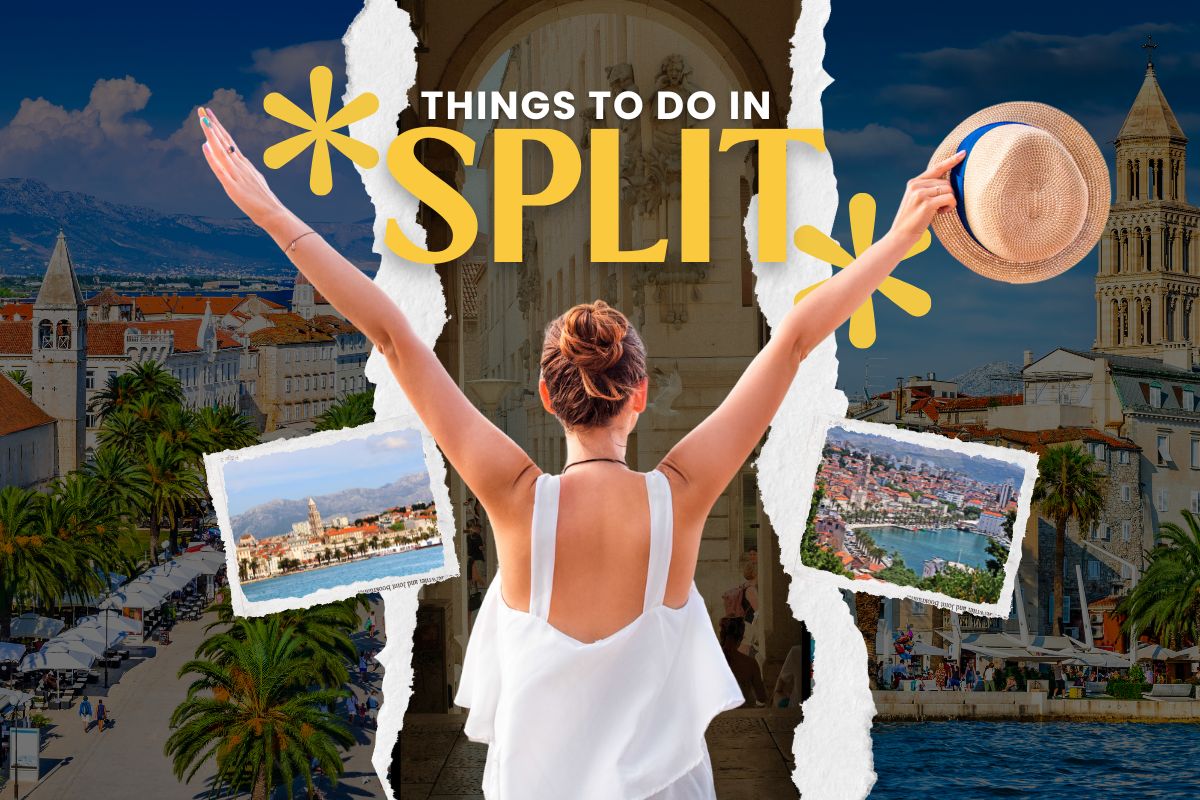
Croatia’s second-largest city takes a back seat to Dubrovnik, which is insane. Split has Roman ruins you can walk through, beaches where locals go for a swim and restaurants where people eat daily rather than cater to tourists. Things to do in Split will comfortably cover at least three days, if you’re honest about it.
The city was built around Diocletian’s Palace, an enormous retirement complex built in A.D. 305. But it’s not a museum you pop in to for an hour. People live there. Shops operate inside ancient walls. Cafes serve coffee in buildings that are 1,700 years old. The old town is dominated by the palace, which occupies almost half of it.
Walking Through Diocletian’s Palace
Start with the palace because you can’t exactly miss it. The marble streets can become slippery in the rain, so watch your footing. The Peristyle is the big square where everyone goes. You’ll see buskers, tour groups, and locals chilling on the steps.
The cathedral’s here too, tucked inside Diocletian’s mausoleum. Cathedral of Saint Domnius, if you prefer the full name. There are views from the bell tower if you can make it up there, but it’s knackering. Narrow spiral steps that go on forever. Worth it though.
If you can, go on a guided tour of it first. They will point out things you would otherwise miss. Game of Thrones was shot here, so there’s that if you’re into it. After the tour, just wander. Lose yourself in the dim alleyways. Tiny shops selling Croatian olive oil, truffles, and jewellery are tucked into corners.
The Riva’s Where Everyone Ends Up
The waterfront promenade in Split includes palm trees, outdoor cafes and boats bobbing on the water in the harbour. It’s named Split’s living room for a reason. This is where locals gather with friends and drink coffee while watching the world go by.
Take a table in one of the cafes. Order a spritz. People watch for an hour. The Adriatic’s right there, looking swell when the sun shines on it.
Beaches You Can Actually Reach
Bačvice Beach is a 10-minute walk from the old town. Soft sand, which is rare in Croatia. Shallow water that stretches out forever, making it brilliant for things to do in Split with kids. They can paddle safely whilst you actually relax.
Locals play picigin here, a traditional game played in shallow water. It looks mental, but it’s part of Split’s culture. Watch for a bit. You’ll see what I mean.
Kašjuni Beach on the Marjan Peninsula is quieter. Tree-covered cove. Pebbles instead of sand. Less crowded than Bačvice, so if you want peace, head there instead.
Climbing Marjan Hill
Marjan is a forest park on the western side of the city. It’s a proper climb. Stairs. Lots of them. The views from the first viewpoint, however, are stupendous. Below are the terracotta rooftops of Split, the sea sparkling in the distance.
If you need a break, there is a cafe at the first viewpoint. The old Jewish cemetery’s there as well. And if you feel like more, keep ascending into the forested area. Ancient cliffside dwellings. Two summits with even better views. You could spend an entire afternoon on top of that thing.
The climb’s one of the best free things to do in Split. No entry fee. Just your legs doing the work.
Also Read: Things to Do in Notting Hill: Classic Spots and Local Secrets
Wine Tasting Without the Snobby Nonsense
Croatian wine is amazing, and nobody talks about it enough. Dalmatian wines, from crisp whites to robust reds, are worth a try. Numerous places in the old town provide tastings, with local cheeses, prosciutto and bread.
You don’t have to be a wine connoisseur to appreciate it. The sommeliers don’t talk down to you. You taste, you eat, you pick up a little knowledge of Croatian wine making. Simple as that.
Day Trips From Split
Split’s a perfect base for day trips. Trogir’s 30 minutes away by bus. A medieval town that looks like a fairy tale. Proper charming.
Klis Fortress is 20 minutes outside the city on a clifftop. And Game of Thrones was shot there if you care. Even if you don’t, the vistas of Split and the nearby mountains are worth a trip there.
Island hopping’s massive here. Every day, boats leave for nearby islands. It is quiet at Šolta, and it is like stepping back in time. The turquoise water of the Blue Lagoon, where everybody takes a swim. Croatia has more than 1,000 islands to choose from.
Krka National Park is an approximately 90-minute drive. Waterfalls, swimming spots, hiking trails. Fill a picnic basket and spend the day.
Where to Eat
Villa Spiza’s tiny. Two outposts across the street from each other. The menu changes daily based on what seafood is fresh. They don’t take reservations. Get there early or wait ages for a table. Worth it though. Proper Croatian food is cooked brilliantly.
Konoba Matejuška is between the Riva and Marjan Peninsula. Traditional konoba serving peka (baked meat and vegetables) and truffle pasta. Locals eat there, which tells you something.
Things to do in Split for young adults include hitting the rooftop bars. Artičok’s lively with decent cocktails and food. The risotto’s spot on. They do aged cheese appetisers and gregada, a traditional fish stew that’s brilliant.
For something different, Maka Maka Split does acai bowls and poke bowls. Millennial as anything, but the salmon poke bowl’s delicious. Perfect for lunch when you want something light.
The Lucky Toe
Outside the palace’s northern gate stands a 28-foot statue of Gregory of Nin, a 10th-century Croatian bishop. Local artist Ivan Mestrovic created it in 1929.
Here’s the thing: rub the statue’s left toe. It’s been polished to a shine because everyone does it. Legend says it brings good luck and guarantees you’ll return to Split. Superstitious? Maybe. But why risk it?
What to Skip
Skip the overcrowded restaurants on the main square. Tourist traps with English-only menus listing pizza and burgers. Walk five minutes away, and you’ll find better food for less money.
Don’t visit in peak summer unless you love crowds. July and August are mental. The entire city’s packed with cruise ship tourists. September through October or the spring months are far better. Still warm and sunny, but with reasonable prices and breathing room.
Also Read: New York Teenager: Things to Do for First-Time Visitors
Actually Experiencing Split
Things to do in Split aren’t about ticking boxes. It’s about wandering ancient streets where people actually live. Eating at restaurants where locals eat. Swimming where families swim. Drinking wine without pretension.
Split’s not trying to be Instagram-perfect like Dubrovnik. It’s a working city that happens to have incredible Roman ruins and a gorgeous coastline. That’s why it’s better, honestly. You get history without the theme park feel.
Give it three days minimum. You’ll want more once you’re there. And don’t forget to rub that toe before you leave.