Formula One looks fast on the surface. Cars. Noise. Champagne.
But the real power often sits a few metres back from the grid, wearing a headset, staring at timing screens, and making calls that cost millions in seconds.
Team principals don’t just manage drivers and engineers. They manage budgets the size of small nations, negotiate contracts under pressure, and live with decisions that can make or break careers. Some of them do it on a salary. A few do it with ownership stakes. And that difference matters.
Which brings us to the question people quietly Google at 1 am.
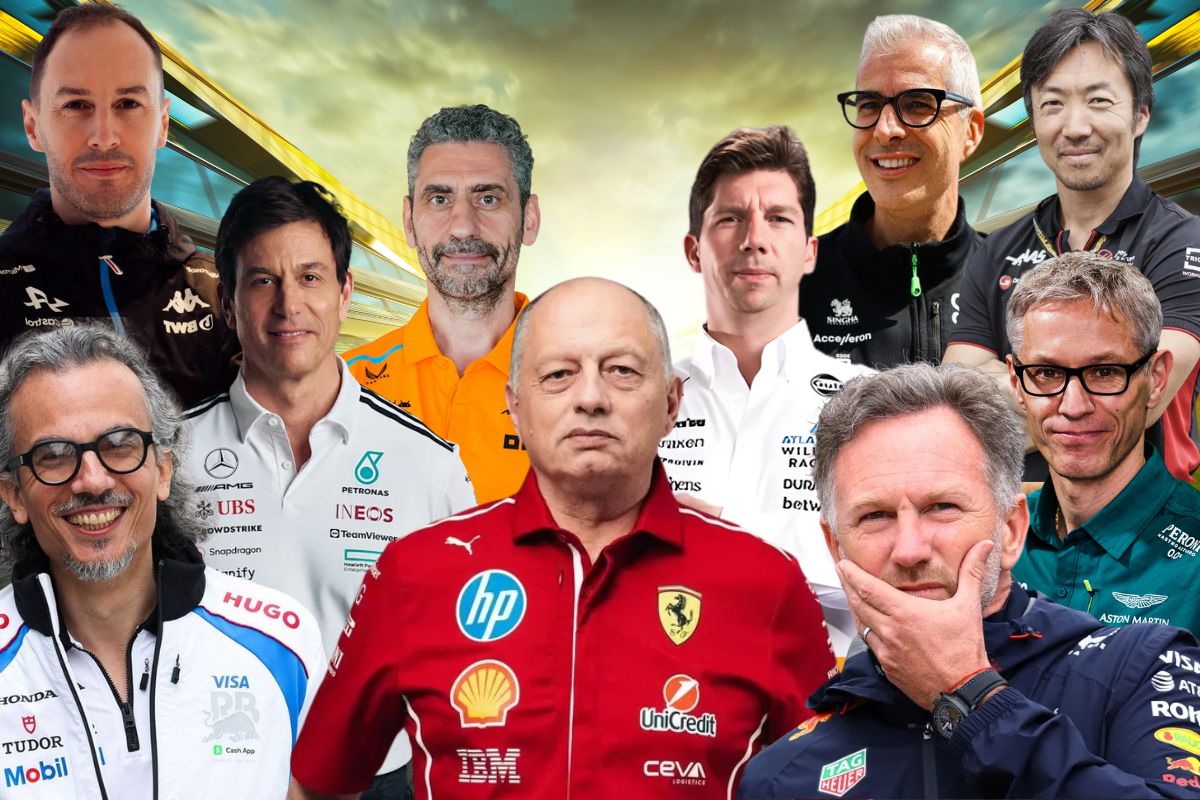
Who are the top 10 richest F1 team principal figures right now? Before going any further, one thing needs to be clear.
None of these net worth figures are official declaration. Formula One doesn’t publish personal wealth. What follows is based on public reporting, company filings, verified interviews, and long-term career earnings, pulled together cautiously. Estimates only. Rounded. Sensible.
Alright. Let’s get into it.
Methodology: How The Ranking Was Put Together
Net worth in F1 isn’t published in any official, tidy list. Teams don’t release it. The FIA doesn’t release it. Most principals don’t talk about it in numbers either. So this ranking is built the only way it can be built: carefully, using what’s already on the public record.
Sources used (public reporting only)
We have pulled estimates and supporting details from:
- Forbes profiles and wealth reporting, where available (especially around high-profile investors and executives)
- Bloomberg coverage of ownership stakes, investments, and major business positions
- Business Insider reporting on F1 leadership, pay, and business backgrounds
- Public financial disclosures such as company filings, shareholder information, and official announcements (where relevant, mainly for ownership structures and executive roles)
- Verified media interviews and long-form reporting where principals have openly discussed equity, business interests, or career earnings history
What counted in the estimate
Because “net worth” is really just a basket of different things, we used consistent criteria across every name:
Salary and bonuses
Team principal pay varies a lot, but long tenure at a top team usually means higher compensation and bigger performance bonuses.
Ownership stakes or equity
If a principal owns a share of the team or has equity tied to the operation, that carries far more weight than salary alone. This is the single biggest reason the top spot is so far ahead.
Business ventures outside F1
Investments, advisory roles, board positions, property, and other ventures were considered only when credible reporting connected them to the individual.
Long-term career earnings
Many principals spent decades as senior engineers, executives, or motorsport leaders before becoming team bosses. That career runway matters.
A clean disclaimer (because it matters)
Net worth figures are estimates based on publicly available data and may vary. Different outlets use different methods, and private assets aren’t fully visible. So think of this as a sensible range, not a precise bank balance.
And yes, one final reality check.
A salaried team boss and an owner-principal aren’t playing the same game. That gap shows up fast, and it explains a lot of the ranking.
Also Read: Top 10 Famous Alto Vocalists Who Made Deep Voices Truly Brilliant
Quick Overview of Richest F1 Team Principals (Estimated)
| Rank | Team Principal | Team | Estimated Net Worth |
|---|---|---|---|
| 1 | Toto Wolff | Mercedes | ~$1.6 billion |
| 2 | Christian Horner | Red Bull Racing | ~$50 million |
| 3 | Fred Vasseur | Ferrari | ~$10–15 million |
| 4 | Andrea Stella | McLaren | ~$8–12 million |
| 5 | James Vowles | Williams | ~$5–8 million |
| 6 | Mike Krack | Aston Martin | ~$5–7 million |
| 7 | Ayao Komatsu | Haas | ~$4–6 million |
| 8 | Laurent Mekies | RB | ~$4–6 million |
| 9 | Alessandro Alunni Bravi | Sauber | ~$3–5 million |
| 10 | Oliver Oakes | Alpine | ~$3–5 million |
Top 10 Richest F1 Team Principals
Note: All net worth figures are estimates based on publicly available reporting. They are not official disclosures.
1. Toto Wolff – Mercedes
Estimated Net Worth: ~$1.6 billion
Role: Team Principal and CEO
Years in F1: 2013–present
How They Built Their Wealth:
- Minority ownership stake in Mercedes F1 Team
- Long-term executive salary and championship bonuses
- Venture capital and financial investments outside Formula 1
Career Highlights:
- Oversaw Mercedes’ dominance during the hybrid era
- Multiple Constructors’ and Drivers’ Championships
- One of the few owner-principals in modern F1
Sources:
2. Christian Horner – Red Bull Racing
Estimated Net Worth: ~$50 million
Role: Team Principal
Years in F1: 2005–present
How They Built Their Wealth:
- Long-term salaried role with performance bonuses
- Commercial involvement during Red Bull’s championship eras
- Media and executive compensation over two decades
Career Highlights:
- Led Red Bull to multiple Constructors’ and Drivers’ titles
- Longest-serving team principal on the current grid
- Central figure in Red Bull’s modern dominance
Sources:
- Business Insider
- PlanetF1
- Forbes
3. Frédéric Vasseur – Ferrari
Estimated Net Worth: ~$10–15 million
Role: Team Principal
Years in F1: 2016–present
How They Built Their Wealth:
- Senior team principal salaries across multiple teams
- Long-term motorsport management career
- Advisory and leadership roles prior to Ferrari
Career Highlights:
- Team principal roles at Renault, Sauber, and Ferrari
- Reputation for operational stability and leadership
- Oversaw Ferrari during the key rebuilding phase
Sources:
- Bloomberg
- Business Insider
- PlanetF1
4. Andrea Stella – McLaren
Estimated Net Worth: ~$8–12 million
Role: Team Principal
Years in F1: 2000s–present
How They Built Their Wealth:
- Senior engineering and leadership salaries
- Long career at Ferrari and McLaren
- Performance-linked incentives
Career Highlights:
- Key technical roles during Ferrari’s championship years
- Led McLaren’s recent competitive resurgence
- Recognised engineering leadership
Sources:
- PlanetF1
- Business Insider
- Motorsport.com
5. James Vowles – Williams
Estimated Net Worth: ~$5–8 million
Role: Team Principal
Years in F1: 2000s–present
How They Built Their Wealth:
- Long tenure at Mercedes in senior strategy roles
- Executive salary as Williams team principal
- Performance-based incentives
Career Highlights:
- Key strategist during Mercedes’ dominant era
- Leading Williams’ long-term rebuild
- Highly respected technical leadership
Sources:
- Business Insider
- PlanetF1
- BBC Sport
6. Mike Krack – Aston Martin
Estimated Net Worth: ~$5–7 million
Role: Team Principal
Years in F1: 2022–present
How They Built Their Wealth:
- Senior motorsport executive roles at BMW and Porsche
- Team principal’s salary at Aston Martin
- Long-term engineering leadership
Career Highlights:
- Guided Aston Martin’s performance growth
- Strong background in endurance and GT racing
- Stable executive leadership
Sources:
- PlanetF1
- Motorsport.com
- Business Insider
7. Ayao Komatsu – Haas
Estimated Net Worth: ~$4–6 million
Role: Team Principal
Years in F1: 2016–present
How They Built Their Wealth:
- Internal promotion within Haas
- Senior engineering and leadership salaries
- Long-term Formula 1 involvement
Career Highlights:
- Oversaw Haas’ operational restructuring
- Known for technical consistency
- Low-profile but stable leadership
Sources:
- MSN
- Autosport
- Business Insider
8. Laurent Mekies – RB (Racing Bulls)
Estimated Net Worth: ~$4–6 million
Role: Team Principal
Years in F1: 2000s–present
How They Built Their Wealth:
- Senior FIA roles
- Executive positions at Ferrari and RB
- Long-term technical leadership
Career Highlights:
- Regulatory and sporting influence at FIA
- Senior leadership roles across multiple teams
- Technical credibility
Sources:
9. Alessandro Alunni Bravi – Sauber
Estimated Net Worth: ~$3–5 million
Role: Managing Director / Executive Lead
Years in F1: 2010s–present
How They Built Their Wealth:
- Legal and governance leadership
- Long-term executive compensation
- Negotiation and regulatory roles
Career Highlights:
- Key figure in Sauber’s Audi transition
- Legal and strategic leadership
- Quiet but influential presence
Sources:
10. Oliver Oakes – Alpine
Estimated Net Worth: ~$3–5 million
Role: Team Principal
Years in F1: 2024–present
How They Built Their Wealth:
- Ownership of junior racing teams
- Former professional racing career
- Executive salary at Alpine
Career Highlights:
- Successful team owner in feeder series
- Rapid rise to F1 leadership
- Youngest principal on the grid
Sources:
Also Read: Who Are the Top 10 Nicest Celebrities You’d Actually Want to Meet
Experience Signal: What Actually Separates the Wealth
If you line these names up and ignore the hype, one thing jumps out straight away.
Ownership beats salary—every time.
Team principals who own part of their team don’t earn more because they work harder. They earn more because they’re tied to the value of the business. When prize money goes up, when sponsorship grows, and when the team becomes worth more on paper, they benefit automatically. That’s why the gap at the top is so wide.
Salaried principals can still make very good money. Decades in the sport add up. Bonuses help. Longevity helps. But it’s never the same league as owning a slice of the operation.
There’s another quiet divide too. Some principals came up through engineering and stayed in racing their whole lives. Others arrived from finance, management, or executive roles where investing was already part of the job. The second group often had money working for them long before they ever sat on the pit wall.
So when people ask why some team bosses are vastly richer than others, the answer isn’t complicated. It’s not about titles or TV time. It’s about whether they were paid to run the team, or whether they owned part of it.
How the Money Really Breaks Down
People often mix up “highest paid” with “wealthiest” in Formula 1. They’re not the same thing. It’s not even close.
Some principals earn very high annual salaries. Seven figures isn’t unusual at the top teams. Add performance bonuses for wins, championships, or commercial targets, and the yearly pay can look impressive. But salary only tells you what someone earns. It doesn’t tell you what they keep or grow over time.
That’s where the gap opens.
The wealthiest principals aren’t always the highest paid in a given year. They’re the ones whose income isn’t limited to a contract. Ownership changes the maths completely.
If you own part of a team, you’re tied to prize money, long-term valuation, and commercial growth. Even a small equity stake can outstrip decades of salary if the team succeeds.
Salaried managers live in a different lane. Their pay rises with results, but it stops there. They don’t benefit directly when the team’s value doubles or when a new investor arrives. That’s why long-serving principals without ownership still sit far below owner-principals on any rich list.
Regulations play a role too, just not in the way most fans assume. Cost caps limit what teams spend on cars and staff, but senior executives sit outside those restrictions. Principals and CEOs aren’t capped in the same way as engineers or mechanics are.
Still, cost control has shifted priorities. Teams are leaners. Boards watch executive pay more closely. Big bonuses are harder to justify without results.
So when you compare principals, it helps to ask one simple question. Are they being paid to run the team, or do they own a piece of it? That answer explains almost everything that follows.
Where That Leaves Things
The interest in the Top 10 richest F1 team principal list isn’t really about the numbers. It’s about how Formula One actually works.
Some principals build wealth over decades of senior roles. Some arrive with business leverage already in place. A rare few secure ownership early and never give it up. That difference matters more than titles or pay packets.
The pit wall looks quiet on screen. Calm voices. Headsets. Folded arms. But behind those decisions sit contracts, equity, pressure, and consequences that last far longer than a race weekend.
So the next time a safety car reshuffles everything and a team boss barely flinches, remember this.
They’re not just managing a car. They’re protecting an empire.
Also Read: Top 10 Esports Games That Dominate Competitive Gaming
Frequently Asked Questions
Who is the richest F1 team principal ever?
That’s Toto Wolff, and it isn’t close. His wealth comes from owning part of the Mercedes F1 team, not just running it. Team value growth did the heavy lifting.
Do team principals own their teams?
Most don’t. Nearly all are salaried managers. A small few have ownership stakes, and that’s where serious wealth starts. Salary alone doesn’t get you into billionaire territory.
Are F1 principals richer than drivers?
Usually no. Top drivers earn more through pay and endorsements. Owner-principals can overtake them over time, but salaried principals rarely do.
How accurate are net worth estimates?
They’re rough estimates based on public info. Useful for comparison, not exact figures. Anyone claiming precision is guessing.
Sources and Links
- PlanetF1. “F1 Team Principals’ Net Worth Estimates,” PlanetF1, https://www.planetf1.com/news/f1-team-principals-net-worth
- Crash.net. “Revealed: Net Worth of Every F1 Team Principal,” Crash.net, https://www.crash.net/f1/news/1024506/1/revealed-net-worth-every-f1-team-principal
- Wikipedia contributors. “Toto Wolff,” Wikipedia, last updated recently, https://en.wikipedia.org/wiki/Toto_Wolff
- Wikipedia contributors. “Christian Horner,” Wikipedia, last updated recently, https://en.wikipedia.org/wiki/Christian_Horner
- Wikipedia contributors. “James Vowles,” Wikipedia, last updated recently, https://en.wikipedia.org/wiki/James_Vowles
- RacingNews365. “F1 2025: Meet the 10 Team Principals,” RacingNews365, https://racingnews365.com/f1-2025-meet-the-10-team-principals
Notes on Sources
- Net worth figures are estimates based on public reporting and may vary.
- Some estimates may differ slightly between outlets; figures cited were chosen for consistency with current reporting as of late 2025.