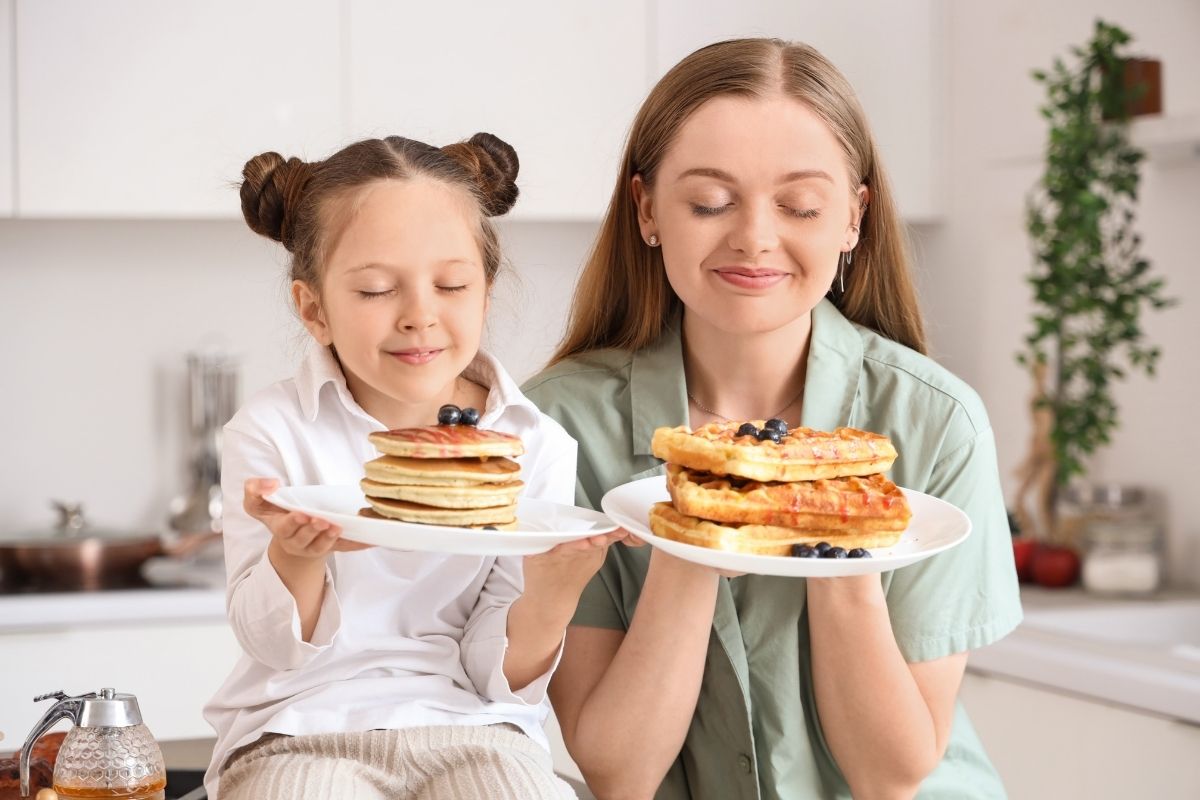
You can probably still catch that faint smell of overcooked batter and squeezed lemon hanging in the air. Walk down any British high street a couple of weeks ago, and you’d have seen the usual chaos, parents wrestling with frying pans at home and office workers legging it down the street with a pancake threatening to escape mid-flip. Pancake day, and quite frankly, it was one of the messiest, most awesome iterations of this tradition we’ve witnessed in years.
There’s something deeply comforting about a country that collectively decides to eat dessert for dinner. But this year felt a bit different. Maybe it’s because it fell right in the middle of the February half-term, or maybe we’re all just looking for an excuse to forget the heating bills for an evening. Whatever the reason, the UK went absolutely pancake-mad. From the historic streets of Olney to the glass towers of Paddington, the flip was well and truly on.
Whether you’re still scraping dried batter off the ceiling, or you’re already strategising for next year, here’s the lowdown on the trends as they stand, the triumphs and kitchen catastrophes that defined Shrove Tuesday this time around.
The Year of the “Global Pancake Flight”
For decades, the British pancake was a simple beast. You had your thin, slightly rubbery crêpe, a squeeze of Jif lemon, and a shower of granulated sugar. That was it. If you got fancy, you may have added a bit of Nutella. But in 2026, the “Global Pancake Flight” became the must-have dinner.
Instead of one giant stack, families were serving up mini-tasters. We saw Japanese soufflé pancakes that wobbled like jelly, savoury Indian Dosas, and thick, fluffy American stacks all on one plate. Restaurants across London embraced this, with Londonist reporting a massive surge in “bottomless” international pancake menus. People aren’t just flipping anymore; they’re experimenting.
Why Exploring Global Cuisines is the Ultimate Social Adventure
Racing for Glory (and Charity)
You haven’t really lived until you’ve seen a group of people dressed in full ceremonial robes or bowler hats running at speed while attempting to flip a lump of cooked batter. One of the standout moments this year was the Inter-Livery Pancake Race at Guildhall Yard. People watching couldn’t stop joking that it looked like a “Harry Potter teachers’ race” thanks to the wildly theatrical outfits. It’s loud, a bit ridiculous, and completely British in the best way.
Meanwhile, over in Buckinghamshire, the Olney Pancake Race once again claimed its place as the world’s oldest, dating all the way back to 1445. There’s something genuinely lovely about seeing local women in aprons keeping a tradition alive that’s been going on for nearly six centuries. In the meantime, another challenger appeared on the scene: the Paddington Relay at Kingdom Street. It was a fast-moving, mildly chaotic event that raised a reasonable sum for the North Paddington Food Bank. It’s a testament to the fact that even our silliest traditions can do a bit of real-world good.
Savoury Stacks and Caffeine Batters
Lemon and sugar still hold the crown—let’s be real, you can’t beat the classics—but the “viral” flavours took a turn for the weird. Dulce de Leche was everywhere this year, inspired by a big push from Casa Argentina. It’s a thick, South American caramel that makes standard syrup look a bit pathetic.
The real curveball, though, was the rise of the “Dinner Pancake.” We’re talking Chicken Katsu toppings or spicy Tikka fillings. And for the adults? Coffee Pancakes. People were literally whisking espresso shots into their batter to create a caffeinated brunch stack. It sounds like a lot, but after a long winter, that extra kick was exactly what most of us needed.
What Keeps Great British Menu Going: A Deep Look at Britain’s Toughest Food Show
Supermarket Survival Kits
Since the big day hit during half-term, the supermarkets went into overdrive. Iceland basically won the budget war with their famous £3 “Pancake Day Kit.” You got the pan, the syrup and the lemon for less than half a posh coffee. It’s a godsend for parents who have three children to entertain on a rainy Tuesday.
Waitrose went in the opposite direction, emphasising “Elevated Basics.” They registered an enormous surge in sales for organic Alpro alternatives and Fairtrade bananas, meeting the needs of a growing vegan and eco-conscious crowd. Even the supermarkets got in on the act, with Tesco and Sainsbury’s using their loyalty apps to drop the price of lemon juice down to pennies. It made the entire event feel accessible, which is what, to my mind, folk tradition should be.
Why We Still Flip After All These Years
At its heart, Shrove Tuesday is supposed to be about clearing the cupboards before Lent. It’s a “pantry dump” of eggs, fats, and sugar. But as The Independent pointed out in their 2026 history recap, the religious meaning has mostly taken a backseat to the pure joy of the ritual.
It has a communal feel to it. You know your neighbours are likely dealing with the same lumpy batter or the same “first pancake” that gets stuck to the bottom of the pan. In an increasingly digital and distanced world, hovering above a hot stove and giggling at a failed flip is grounding. It’s a piece of tactile history in our kitchens.
The Verdict: Was 2026 a Success?
Honestly, any year where nobody ends up in A&E with a frying pan injury is a win. But Pancake Day 2026 felt like a proper celebration. We saw a mix of the ancient and the hyper-modern. Whether you went for a zero-waste recipe from Milk & More or bought a pre-made mix from the corner shop, you were part of something.
The “Pancake Board” trend—basically a charcuterie board but with pancakes—was the final nail in the coffin for boring dinners. It looks great on social media, sure, but it’s also just a fun way to eat. As we move into the rest of March and the quiet reflection of Lent, that sugary high is going to have to sustain us for a while.
Spencer Metzger: The Chef Who Cold-Called The Ritz at 15 and Never Looked Back
FAQ: Everything You Missed About the Big Flip
Why does the date of Pancake Day change every year?
It’s all down to Easter. Pancake Day always falls 47 days before Easter Sunday. Because Easter is based on the lunar calendar, Shrove Tuesday drifts between February and March.
What is the “First Pancake Rule”?
It’s an unwritten law of physics. The first pancake always has to be a sacrificial lamb. The pan’s not hot enough, the butter’s all wrong and it usually looks like a scrunched-up napkin. (Do not throw it away—eat it when no one is watching.)
Can you make pancakes without eggs?
Absolutely. In 2016, vegan recipes exploded. Mash one ripe banana or use a little bit of apple sauce for a binder. Honestly, with enough syrup on top, most people can’t tell the difference.
What was the most popular topping this year?
Even with all the fancy Tikka and Dulce de Leche trends, a whopping 70% of the UK still looked for the lemon and sugar. Some things are just untouchable.
Where can I find the best recipes for leftovers?
If you have batter remaining, store it in the fridge for up to 24 hours. You can even freeze pancakes that are already cooked but with a layer of greaseproof paper in between them. Just pop them in the toaster for a quick breakfast.