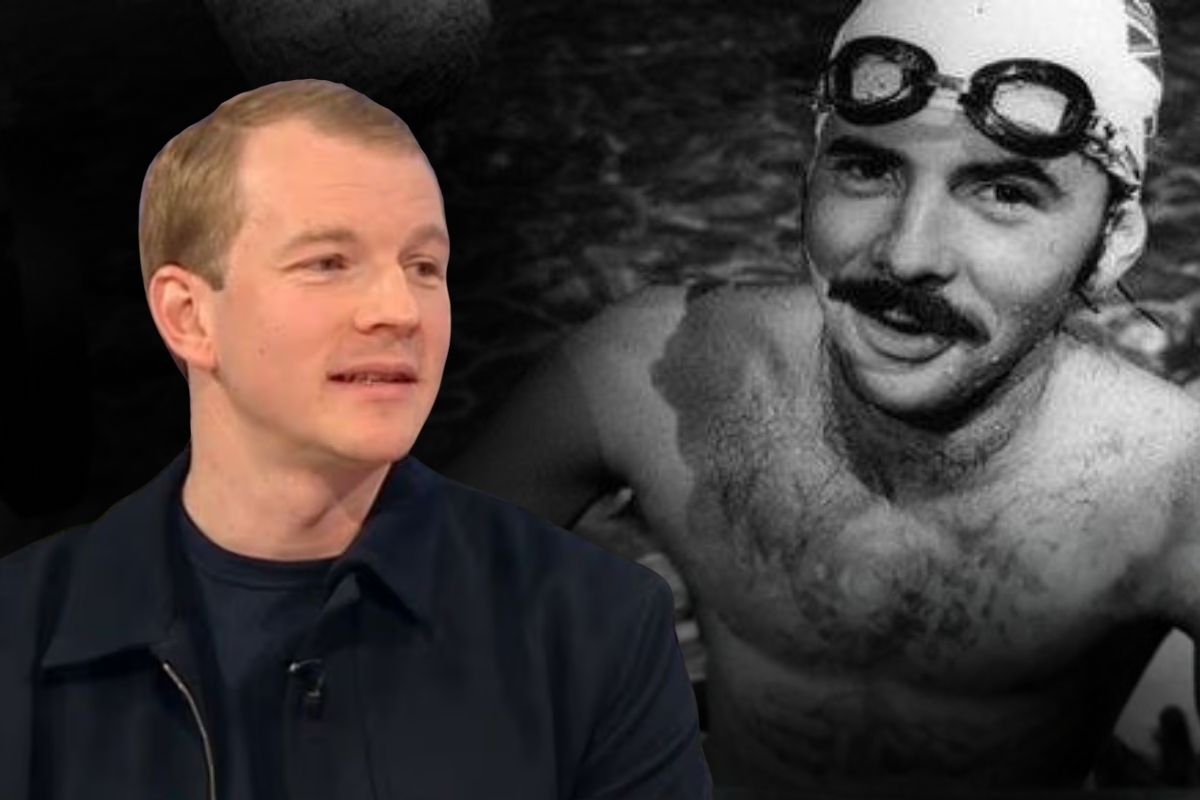
It’s a really, really long time to hold your breath for fifty years. Back in the summer of 1976 in Montreal, David Wilkie swimmer sporting a moustache and an entirely new silicone cap, sped through the water and finished in a time that didn’t seem within the bounds of human ability. He did much more than collect a gold medal that day, ending a sixty-eight-year wait for British men to win and completely altering everyone’s understanding of breaststroke.
Now, in April 2026, that legendary 2:15.11 mark is trending once again. It isn’t because of a grainy replay or a museum exhibit. It is because his son, Adam Wilkie, has stepped onto the starting block to attempt the unthinkable.
The Wilkie family story is unfolding more like a film than something you’d read in the sports section. Everyone in swimming was deeply saddened by the death of the Olympic champion in May of 2024; he’d been someone who’d really led the way. However, as the fiftieth birthday of his gold medal win in Montreal gets closer, people aren’t just remembering him; they are in a desperate rush to do something.
Adam Wilkie, thirty-three years old now, has recently given up his job to train full-time, with the goal of being as fast as his dad once was. This undertaking, which is called “In My Father’s Lane”, has won over the British people.
Quick Stats: The Wilkie Record
| Metric | David Wilkie (1976) | Adam Wilkie’s Goal (2026) |
| Event | 200m Breaststroke | 200m Breaststroke |
| Record Time | 2:15.11 (World Record) | 2:15.11 (Personal Quest) |
| Fundraising Goal | N/A | £215,000 |
| Equipment | First to use Cap & Goggles | Modern Elite Tech |
The Man Who Invented the Modern Swimmer
If you want to know why a son would give up everything to obsess over a memory of David Wilkie swimmer, you first have to get a sense of what the original David Wilkie was like. He wasn’t simply quick in the water; he changed the way things were done.
Before Wilkie, elite swimmers didn’t typically prioritise smoothness and cohesion in their strokes. He was the very first to wear a swim cap and goggles together in a big international final – something that’s perfectly normal now but gave him a significant advantage in 1976.
That race in Montreal is still talked about in coaching clinics. Wilkie didn’t just win; he decimated the field, taking more than three seconds off the world record. That kind of gap is unheard of in modern swimming. He held the British, Commonwealth, European, World, and Olympic titles all at the same time.
According to his official Team GB profile, he remains one of the most decorated athletes the country has ever produced. He retired at just twenty-two, leaving the sport at the absolute peak of his powers.
From the Boardroom back to the Starting Block
Many people forget that Wilkie was as sharp in business as he was in the water. After hanging up his trunks, he didn’t just fade away. He co-founded a healthcare company called Health Perception (UK) Ltd. It was a massive success, eventually selling for nearly £8 million in 2004. He proved that the discipline required to break a world record translates pretty well to the corporate world.
But the “Wilkie” name is back in the water this week for a much more emotional reason. Adam Wilkie’s baseline test at the Aquatics GB Swimming Championships on April 18, 2026, marked the official start of his quest.
The crazy part? Adam wasn’t an elite swimmer. In fact, he famously spent years avoiding deep water. The journey isn’t just about the physical 2:15.11 time; it’s about a son trying to find a connection with a father who passed away before they could have one last talk.
Also Read: Who Is Theo Toksvig-Stewart? All About Sandi Toksvig’s Son
The Madness of Chasing 2:15.11
Can someone who’s thirty-three and has never been a professional actually hit a time that was the world’s record for six years? Nearly all the experts believe it’s a massive ask.
To swim 200 metres breaststroke in two minutes and fifteen seconds requires a fantastic level of endurance and absolutely flawless form, and both of these generally need years and years of dedication to develop.
But it’s that wonderfully challenging part of it that draws people in. Adam, as BBC Breakfast put it, isn’t just racing against the seconds on the clock; he’s trying to raise £215,000 for SportsAid.
His training is unbelievably demanding, four hours at a time, and his food… well, most of us would find it pretty awful. Adam’s using the same kinds of sports scientists who helped his dad in an attempt to link the technology of 1976 with how athletes recover in 2026. There’s been a huge amount of interest from the public.
People enjoy a story about what someone’s father or family did, and even more when it’s about someone leaving a dull, ordinary office job to attempt something that seems impossible.
A Legacy That Won’t Sink
Everyone remembered David Wilkie, who was seventy and had been ill with cancer, as a true ‘gentleman’ in swimming. He didn’t boast or show off after winning; he simply put in the necessary effort. His son seems to have inherited that determined yet unassuming attitude.
Now, Adam reaching a time of 2:15.11 by the year’s end is almost less important. The wonderful outcome is how many more young people are now learning about the way the David Wilkie swimmer legacy is being introduced to a whole new generation.
Many people say the 200-metre breaststroke is the hardest swim of all. It’s all about a time that absolutely punishes your legs and takes everything you have in your lungs. Adam is doing the same brutal thing, and because of that, he’s starting to understand what it was like for the swimmer who won a medal in Montreal.
It’s a very individual method of dealing with grief; instead of talking about it, he’s going through the smell of chlorine and the burn of a final lap.
It’s really something to observe. When you look at David at his best in past footage, and then at Adam now, training in all the latest facilities, they look incredibly alike. It really shows you that certain qualities, a drive to win, or a determination to never give up, are definitely in the DNA.
Final Thoughts
It’s quite the achievement to keep a name alive for half a century. Most Olympic records are forgotten the moment the next one is broken, but the Wilkie name seems to have a bit more buoyancy than most. It’s not just about the gold; it’s about the bloke who wasn’t afraid to try something new, whether that was wearing a rubber cap or starting a multi-million-pound business.
One thing is for sure—if you’re heading to a pool in the UK this summer, you’re going to hear that 2:15.11 number mentioned more than once. Just don’t expect to hit it yourself unless you’ve got the Wilkie lungs!
Frequently Asked Questions
Why is David Wilkie’s son chasing his record now?
It marks the 50th anniversary of David’s 1976 Olympic gold. Adam wanted a way to honour his father’s memory and raise money for charity following David’s death in 2024.
Was David Wilkie the first to wear goggles?
He wasn’t the first person ever to wear them, but he was the first elite swimmer to wear both a cap and goggles in a major Olympic final, which set the standard for the modern “look” of swimming.
How did David Wilkie die?
David Wilkie passed away on May 22, 2024, at the age of 70. He had been fighting a long battle with cancer.
What was David Wilkie’s business after swimming?
He co-founded a very successful vitamin and healthcare company called Health Perception. He was a pioneer in the “nutraceuticals” industry before it became a mainstream trend.
Can Adam Wilkie really beat a world record time?
It is incredibly difficult. While 2:15.11 is no longer the world record (which is much faster now), it is still an elite-level time that most club swimmers never reach. It’s a massive physical challenge.
Where can I follow the “In My Father’s Lane” journey?
The challenge is being documented across UK media, including BBC News and major sports outlets. Adam also posts updates via his fundraising pages for SportsAid.
Also Read:
Chris Woakes Shows Courage Despite Dislocated Shoulder