You pick up a leather jacket. It has a pattern on it. You think it looks good. You buy it.
What most buyers never stop to ask is: is that pattern raised or pressed in? That single detail changes everything about how the jacket ages, how it feels, and how long the design stays sharp. This is the emboss and deboss difference that most people completely overlook.
At Leather Jacket Black, we work with both techniques on genuine leather. This guide breaks down what each method actually does, where each one wins, and what you need to know before your next purchase.
What Embossing Actually Does to Leather
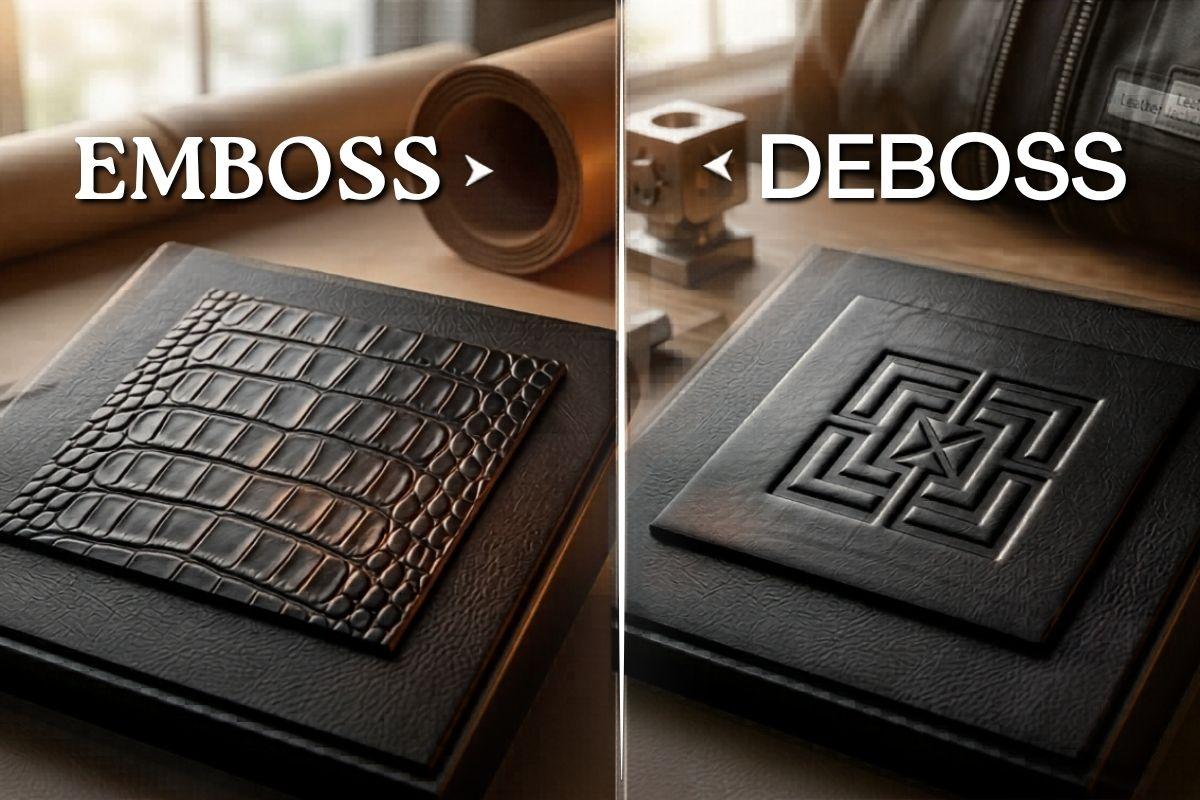
Embossing raises a design above the surface of the leather. Heat and pressure push parts of the hide upward, creating a three-dimensional texture you can feel with your fingertips.
Key facts about embossed leather:
- The pattern sits above the natural surface level of the hide
- Heat and a metal die or roller create the raised texture
- Common uses include logos, crocodile textures, floral prints, and brand marks
- The raised surface can catch light differently, giving a premium visual effect
- Over time, heavy use can slightly compress raised areas back toward the surface
Embossing is heavily used across fashion, accessories, and especially leather jackets, where texture adds to the visual drama of the piece.
What Debossing Does Differently
Debossing is the opposite. Instead of pushing material upward, the die presses the design into the leather, creating an indented pattern below the surface.
Key facts about debossed leather:
- The design sits below the natural surface level of the leather
- Pressure (and sometimes heat) drives the pattern inward
- Common uses include initials, brand stamps, minimalist logos, and clean geometric patterns
- Debossed areas tend to be more protected from surface friction
- The look is more subtle and modern compared to embossing
Many premium brands prefer debossing for logo placement because it reads as understated and intentional rather than decorative.
Emboss and Deboss Difference: The Side-by-Side Breakdown
Here is how the two techniques compare across the factors that actually matter to buyers:
Durability
- Debossed patterns generally hold up better to daily wear since the design is recessed and protected
- Embossed patterns are more exposed to abrasion and can flatten slightly over the years of use
- On full-grain leather, both techniques can last decades with proper care
Visual Impact
- Embossing creates more dramatic, tactile visual texture
- Debossing delivers a cleaner, more refined aesthetic
- Embossed leather changes appearance more with changes in light direction
Feel and Touch
- Embossed leather has a pronounced raised texture under your fingers
- Debossed leather feels smoother overall with defined grooves
- Softness of the base leather remains the dominant feel in both cases
Best Use Cases
- Embossing: reptile textures, decorative patterns, vintage aesthetics, statement pieces
- Debossing: brand logos, initials, minimalist designs, and everyday wear jackets
Why This Matters for Leather Jackets Specifically
On a leather jacket, the placement and technique of surface treatment affect wearability in a real way.
Consider these practical points:
- A heavily embossed collar or sleeve area will compress faster from friction than a debossed equivalent
- Debossed chest logos on jackets look sharp even after years because the indentation is protected
- Embossed patterns over seams or stress points can crack if the leather is not conditioned regularly
- Full-body embossed textures like python or croc print add stiffness that affects fit and drape
- Debossed accents are ideal for clean everyday riders and modern minimalist jacket styles
If you want a detailed breakdown of how these techniques are applied to specific jacket styles, the emboss and deboss difference guide at Leather Jacket Black covers the full production process with real examples.
What Quality Embossing and Debossing Actually Look Like
Not all embossing and debossing work is equal. Poor execution is easy to spot once you know what to look for.
Signs of quality embossed leather:
- Crisp, defined edges with no blurring around the raised design
- Even pressure across the full pattern with no flat or under-pressed spots
- No cracking or stress marks in the leather around the design
- The texture matches the natural grain of the hide, not just a coating on top
Signs of quality debossed leather:
- Clean, sharp edges to the indentation with no tearing or ragged borders
- Consistent depth across the full stamped area
- No stress lines radiating outward from the impression
- The surrounding leather retains its natural softness without stiffening
Low-quality work on either technique tends to show within months of regular wear. Quality work lasts the life of the garment.
Leather Scratch Repair: How Surface Treatments Affect Damage
This is something most buyers never think about until they need to.
When leather gets scratched, the approach to leather scratch repair depends heavily on whether the surface has been embossed, debossed, or left plain.
What changes with surface treatments:
- Scratches on embossed areas are often harder to see because the texture itself provides visual camouflage
- Debossed areas are somewhat protected from surface scratches since the pattern sits below the wear line
- Plain smooth leather shows scratches most obviously and needs the most careful repair work
- Conditioning works on all three, but must be applied with more care on textured surfaces to avoid buildup in grooves
- Colour touch-up products blend better on plain leather than on heavily textured embossed areas
The key insight here is that embossed and debossed leather can actually age more gracefully in visible wear areas than plain smooth leather when properly cared for.
Leather Industry Data Worth Knowing
A few reference points that give context to how widely these techniques are used:
- Over 65% of premium leather goods with surface patterns use some form of embossing or debossing
- Reptile and exotic skin emboss patterns account for a significant portion of the luxury leather accessories market
- Debossed logo placement has grown in preference among European fashion houses since the early 2010s
- Full-grain leather holds emboss and deboss patterns sharper and longer than corrected grain or bonded leather
- Proper leather conditioning can extend the sharp appearance of both techniques for years
How to Choose Between Embossed and Debossed Leather
The right choice depends entirely on what you want from the piece.
Choose embossed leather if:
- You want a bold, textured visual that commands attention
- You are buying a jacket for occasional wear or statement use
- You prefer traditional leather aesthetics with rich surface detail
- You are comfortable with a slightly more structured feel to the material
Choose debossed leather if:
- You want a clean, modern look that ages with minimal visible change
- You wear your jacket daily and need a surface treatment that holds up
- You prefer understated luxury where the quality speaks through material rather than decoration
- You want logo or initials placement that stays sharp over the years
Final Word
The difference between emboss and deboss leather is not just technical. It is the difference between a pattern that stands out and one that settles in. It changes how your jacket ages, how it holds up to daily wear, and how the design reads years from now.
Most buyers walk past this detail entirely. Now you know what to look for.
Leather Jacket Black builds with both techniques intentionally. Every choice in surface treatment is made for durability and design, not just appearance. Explore the full emboss vs deboss breakdown or learn how to handle leather scratch repair at home to keep your jacket in top condition for years.
Frequently Asked Questions
What is the main emboss and deboss on leather jackets?
Embossing raises a pattern above the surface while debossing presses it below the surface. On a jacket, this affects how the texture ages with wear and how dramatic the visual effect reads.
Does embossed leather scratch more easily than debossed?
Raised surfaces from embossing are slightly more exposed to friction and can show compression over time. Debossed areas sit below the wear line and are somewhat more protected from surface contact.
Can you repair scratches on embossed leather at home?
Yes, basic leather scratch repair works on embossed leather. Conditioning products help restore suppleness, and colour touch-ups can address discolouration. However, restoring a deeply compressed embossed pattern is harder than repairing plain leather.
Is debossed leather higher quality than embossed?
Neither is inherently higher quality. Both techniques can be applied to excellent or poor-quality leather. The quality of the base hide and the execution of the pressing process determine the result, not the direction of the pattern.
How do I know if my leather jacket uses genuine embossing or just a printed texture?
Genuine embossing creates a three-dimensional surface change you can feel on both sides of the leather in some cases. A printed texture sits only on the top surface, has no depth on the reverse, and tends to peel or crack faster.
Does the Leather Jacket Black brand use full-grain leather for embossed styles?
Yes. Leather Jacket Black uses full-grain leather for embossed and debossed styles, which ensures the pattern holds its definition over years of wear rather than degrading within months like cheaper corrected-grain alternatives.