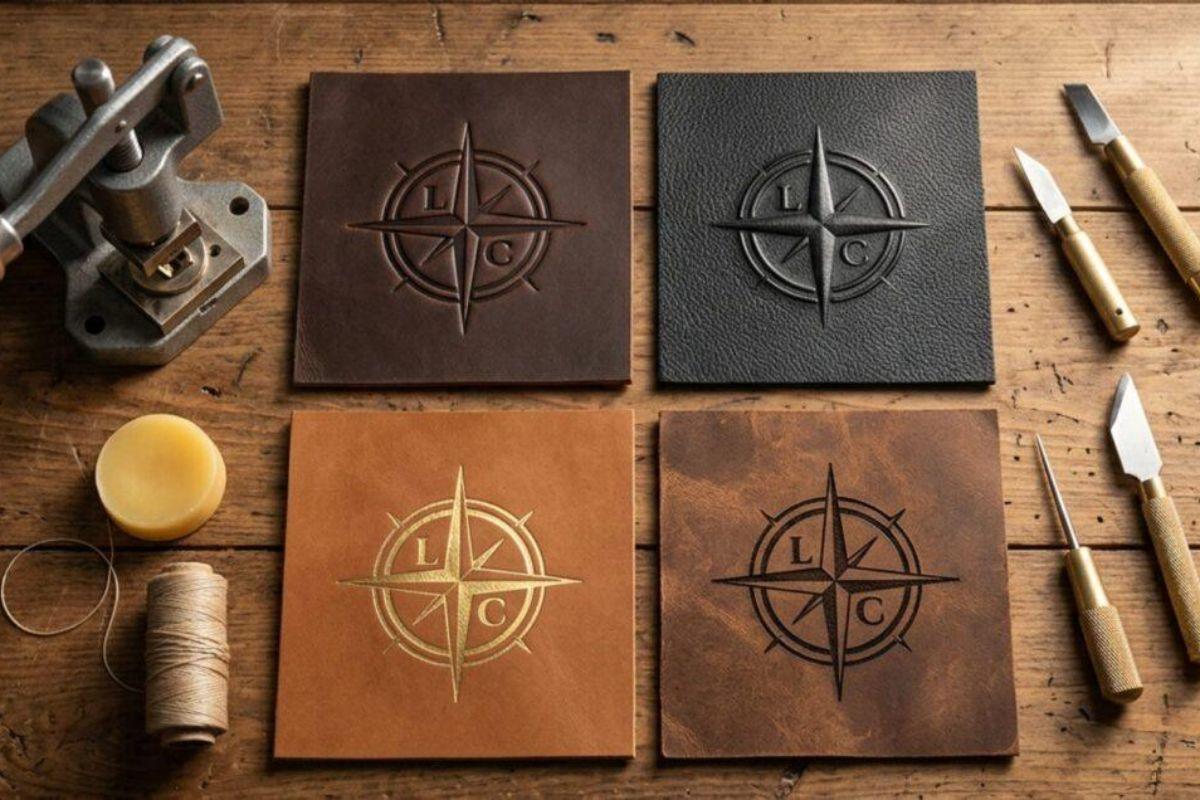
When it comes to branding and leather finishing techniques, nothing beats the application of a logo on the leather to complete the product image. Whether it is premium wallets or promotional gifts, the quality of leather finishing has now become one of the main criteria for the competitiveness of a brand on the market.
The choice of the right leather finishing technique to engrave a logo is not only a question of how it will look, but also a strategy for the future of the business. Today, the global leather market size is estimated to be over $414 billion, with almost 6% growth per year.
This is a complete guide to all the major finishing techniques for leather surfaces in the application of a logo, backed up by statistics and analysis of current market trends.
The Importance of Logos on Leather Goods
Leather has always been the symbol of luxury. But a logo debossed, embossed, or hand-painted onto leather communicates ownership, branding, and quality instantly. Why:
- Branding and Identity: Imprinting a logo on a product creates a long-lasting brand identity and memory.
- Added Value: Custom-branded leather goods are 30%-50% costlier than generic products.
- Loyalty of Customers: Through the distribution of branded leather products as gifts.
- Brand Longevity Branding on leather is much more durable than branding on fabric and paper, and requires very little maintenance.
Industry Statistics: Leather Customisation – At A Glance
| Statistic / Insight | Data Point | Source / Context |
| Leather Goods Market Size, Global, 2023 | $414 billion | Grand View Research, Inc. |
| Leather market growth rate (2024-2030) | 5.9% | Industry Report Statista |
| Consumers who enjoy custom leather products | 67% | McKinsey Consumer Survey |
| Boost brand recall with a debossed logo | As much as 40% | Survey of Packaging Digest |
| Emboss/deboss for branding identity | More than 55% | Journal of the Leather Industry |
| Premium leather growth with laser engraving | 18% year over year | Leather Report IBISWorld |
Top Methods of Customising Leather with Logos
A detailed breakdown of the most widely used leather processing techniques for logo customisation, evaluated by popularity, effectiveness and ideal application context.
- Embossing: Logos that pop
- Debossing – The Understated Sophistication of Minimalist Branding
- Hot Foil Stamping: How Metallic Print Makes Luxury Logos Shine
- Laser Engraving: Accuracy and Permanence
- Screen Printing: Bright Colours For Logo-Heavy Prints
- Hand Painting Custom Artisan Personalisation Unique Logos
1. Embossing: Raised Logos That Stand Out
One of the most recognisable forms of leather finish is embossing. Heat and pressure are applied to give leather a raised, three-dimensional effect. What you get is a logo that is eye-catching and textured.
- Great for: Leather wallets, high-end leather bags, leather gifts and belts
- Durability: Very durable. The three-dimensional effect is made inside the fibres of the leather
- Contrast: High contrast. Best results with smooth or full-grain leather.
- How It’s Done: The leather is stamped from underneath with a heated metal die. Embossing is suitable for textured finishes on leather, such as pebble or matte finishes
2. Debossing: The Subtle Elegance of Minimalist Branding
Whereas embossing raises a design on leather, what is Debossing is a process where the same is pressed into the leather to create a recessed, or sunken, effect. The technique creates a minimalist, elegant look which is loved by most high-end fashion firms and gift brands used by companies.
- Best for: Business card holders, journals, accessories and lettering in leather
- Durable: Yes, because recessed effects do not wear off very easily
- Effect: More refined, subtle, and more appropriate for wordmark branding
- How Done: By pressing a hot die on leather from its top surface to sink a design permanently
Today, debossing is becoming common in leather work as it is perfect for minimalist designs. It looks great with matte and shiny leather finishes.
3. Hot Foil Stamping: Glamorous Metals for Luxury Logos
Using the hot foil stamping method, metal foil is applied to the leather with pressure and heat to make a glittery logo. Popular foil types are gold, silver, rose gold and holographic foils used in luxury leather finishing.
- Best for: Designer leather goods, high-end leather purses and high-end stationery
- Longevity: High, especially with debossing for structural depth
- Visual Effect: Very powerful. The effect is immediate with the metallic logo
- Finishing Options: Application of gloss, matte, satin, holographic and pigmented foils
Hot foil stamping is a popular finishing technique for high-end leather and is frequently combined with pigmented leather finishes.
4. Laser Etching: Accuracy and Durability
Laser engraving is the process of burning the image onto the leather with a highly focused laser beam. This is one of the most accurate leather surface finishing methods in use today that also can engrave detailed images, logos, photographs and small texts.
- Great for: Custom gifts, logos, tech accessories, corporate items
- Longevity: Perpetual. The engraving will never wear out or fade away
- Visual Effect: High contrast effect, as the engraving is shadowed or lightened according to the type of leather used
- Disadvantage: Suitable for vegetable-tanned leather and full-grain finishing. Not suitable for suede leather
This technique is widely used for finishing leather surfaces for commercial purposes.
5. Screen printing: multi-colour logos with vivid colours
Screen printing is the method of applying ink to the leather surface through a mesh screen. This method is able to handle multiple colours in the logo and designs. This method of leather treatment is an economical one for large orders.
- Perfect for: Branded items, workwear and leather patches
- Average longevity. This technique can lead to cracking or peeling due to excessive wear and tear or wet conditions
- Aesthetic Appeal: Very high. This technique produces colourful and detailed logos
- Affordability: Affordable with low to moderate costs
Screen printing is a popular leather processing method when the colours of the brand have to be adhered to within a budget-friendly range.
6. Hand Painting: Personalisation for One-of-a-Kind Logos
This technique requires leather dye and acrylic paint, which are applied directly to the leather material using artisan skills. This type of leather surface detailing is the most artistic. The logos are totally unique and cannot be done by machines.
- Best for: Collectables and fully customised orders
- Durability: This is largely determined by the quality of the application of the sealer
- Creativity: The colour and design possibilities are endless
- Cost: Very expensive due to the amount of artistry involved
Hand painting is the ultimate in leather surface detailing, where what is required cannot be achieved by normal leather manufacturing processes.
Also Read: 10 Polka Dot Dress Trends Inspired by Celebrities
Side-by-Side Comparison of Leather Logo Customisation Methods
| Method | Best For | Durability | Cost Level | Customization |
| Embossing | Raised logos, premium bags | Very High | Medium | High |
| Debossing | Sunken logos, luxury goods | Excellent | Medium | High |
| Screen Printing | Colour logos, bulk orders | Medium | Low | Medium |
| Hot Foil Stamping | Metallic luxury logos | High | Medium-High | Medium |
| Laser Engraving | Fine detail, precision work | Permanent | High | Very High |
| Hand Painting | Artisan, bespoke items | Variable | Very High | Maximum |
Selecting the Right Technique According to the Type of Leather
Not all leather materials are compatible with every technique for customising leather. Below is a list of the best methods for each kind of leather:
- Full-Grain Leather: Great for embossing, debossing, laser engraving, hot foil stamping, and other techniques because of its high fibre content
- Aniline Leather Finish: Good for hand painting and laser engraving. Avoid using heavy heat stamping, as it may change the natural grain pattern
- Semi-Aniline Leather Finish: These types of leather have a light coat, so the embossing and debossing techniques work very well
- Pigmented Leather Finish: Screen printing and hot foil stamping are ideal because they provide a uniform surface coating
- Suede Leather Finish: There is not much you can do to this leather. Hand painting and screen printing are the only techniques that give excellent results
- Nubuck Leather Finish: Stamping can mar the delicate nap of nubuck leather, making laser engraving a good choice
- Waxed Leather Finish: Debossing and cold stamping work great, as other processes could damage the waxed coat
- Distressed Leather Finish: The distressed finish is perfect for debossing and laser engraving
Emboss Vs Deboss: What Is Embossing Vs What Is Debossing
The primary challenge brands encounter in terms of leather logo customisation services has to do with the kinds of leather finishing discussed, such as embossing versus debossing. Both are just as legal and very efficient for custom leather finishing, but they are used for different branding purposes.
What is Embossing: Embossing is a process that uses a die at very high temperatures to create a raised design. The process adds a three-dimensional effect to leather logos, increasing their visibility and attractiveness. It’s bold, it’s luxurious.
What is Debossing: Debossing is a process where a heated die is pressed into leather material to create a sunken logo design. It looks more discreet and sophisticated, which is why minimalist brands often use debossed logos.
Both of them provide high-quality and durable leather finishes if applied properly.
Things to Consider Before Choosing the Customisation Approach
- Budget: The cost of laser engraving and hand painting per unit is higher. Screen printing is the most cost-effective when budgeted per unit volume.
- Complexity of Logo: Laser engraving or screen printing is best for complex logos with fine lines and intricate details, not embossing.
- Type of leather: Always keep the type of leather processing in mind while choosing a method of customisation.
- Order Volume: Hot foil stamping and embossing require a die to be made, and dies are less expensive for larger orders.
- Brand Image: A luxury brand would have to opt for debossing or hot foil stamping, while a streetwear brand might need screen printing or hand painting.
- Product Usage Life: If the product is to be subjected to intensive daily usage, debossing or laser engraving would be preferable.
Also Read: Vincent Kompany Best Outfits Ranked (2026 Edition)
FAQ’s
Q1: What are the ways you can customise leather logos so that they last the longest?
The most permanent are laser engraving and debossing. Laser engraving creates an indelible mark on the leather which can never be worn away by repeated use. The debossed marks, on the other hand, are resistant to any type of surface wear and tear.
Q2: Embossing vs debossing for leather logos – what’s better?
Both are good methods equally, and the choice of one depends upon the brand’s preferences. Embossing creates a raised and very noticeable logo, and debossing creates a sunken logo design that will make the leather look very luxurious and elegant.
Q3: What is the most affordable option for leather logo customisation?
Screen printing is the most economical way to print large quantities. However, it is the least durable method of all and is not used for high-end leather goods.
Q4: Is there any leather customisation option for all types of leather?
No, the different types of leather have their own compatibility issues, depending on the structure and finish of the leather itself. The best choices are full-grain leather and vegetable-tanned leather. Suede and nubuck have fewer options, particularly anything using heat, such as embossing and hot stamping techniques.
Q5: What does hot foil stamping on leather mean?
Hot foil stamping uses heat, pressure and metallic foils to produce logos that are raised above the surface of the leather and have a very metallic sheen. This technique produces metallic logos, which are often used for luxury goods and fashion items. These logos can be golden, silver or any other colour.
Q6: How to decide between screen printing and laser engraving on leather?
For leather personalisation options, screen printing will give you more options to print vibrant logos, while laser engraving will be more appropriate when accuracy and durability are important. Bigger quantities of stuff work better with screen printing, but laser engraving is a nice touch for high-end items.
Q7 What type of leather finishing should be used for corporate gifts?
Debossing and hot foil stamping are the most common leather finishes for corporate gifts. Debossing gives an elegant and classy impression of the logo, reflecting the quality of the gift. The hot foil stamping in gold or silver adds an upscale feel to the gift presentation.
Final Verdict
As you have seen, there is no simple formula for treating leather properly to create a logo, but a complex set of decisions, including aligning your business’s core principles, the quality of the products you make, the specific leather being used, and budgetary constraints.
The most suggested leather surface treatments provided today are embossing, debossing and laser engraving in order to guarantee longevity and durability of the logo. Screen printing is an excellent way to produce bulk colourful branding, and hot foil stamping provides a luxury touch that no other technique can match.
In summary, it’s a wise choice to make for the future growth and development of your brand to choose the proper leather surface treatment to use for a logo.
Also Read:
How Handloom Fabric Suppliers Keep Traditional Weaving Alive