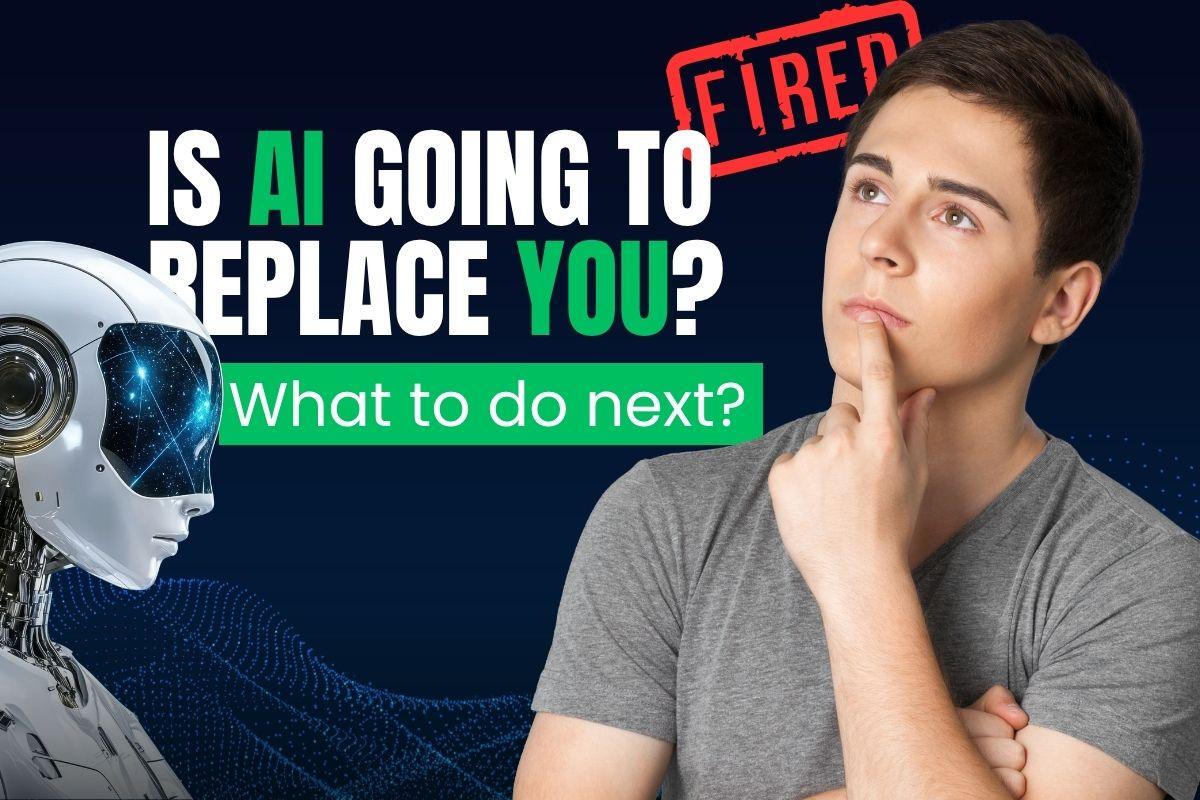
Yeah, AI’s replacing jobs in the UK already. Just not how you’d think. Nobody’s getting robots walking in and handing out P45S. It’s way quieter than that. Is AI going to replace jobs in the UK? The real answer is nobody knows yet – but what we’re seeing now is different. Hiring’s slowed down. Graduate roles collapsed.
Companies are chucking money at AI and just… leaving the jobs empty. Not replacing anyone who leaves. They’re just not filling the gap. The roles aren’t being stolen. They’re simply not being created anymore. That’s the bit people don’t talk about. Just silence where a job posting used to be.
- The UK is the hardest hit country in the world for AI-related job decline, according to Morgan Stanley research
- UK unemployment hit 5.2% in early 2026, a post-pandemic high
- Graduate job postings are down nearly half (approx. 50%) year on year
- 54% of UK businesses now use AI, up from 23% in 2023
- 65% of organisations will use AI-driven assistants, advisors, and agents by 2026, according to IDC
- Over a third of UK workers already use generative AI, the highest rate in Europe
- Demand for AI skills has jumped 245% since 2023
Is AI Going to Replace Jobs in the UK? What the Numbers Actually Show
According to Morgan Stanley research shared with Bloomberg, Japan, Germany, Australia, and the UK all saw jobs decline due to AI over the last year, with the UK being the hardest hit. That’s not a projection. That’s data from the past twelve months.
Unemployment hit 5.2% in late 2025. That’s the highest it’s been since the pandemic ended. Wage growth? Down to 3.8%. Put those two numbers together and the picture’s clear: more people chasing fewer jobs, which means less leverage for anyone actually employed. You can’t ask for a raise when there’s a queue of people willing to take your salary.
Job vacancies fell below 700,000 in January 2026. Lowest since COVID. Graduate roles got absolutely hammered – down 45% year on year. Each vacancy’s getting hundreds of applications now. That’s not exaggeration. A global report from Randstad Digital found that 38% of employers are deliberately hiring fewer graduates. Why? Because of AI. They’re not replacing existing staff. They’re just not backfilling the roles they used to.
The chief executive of Robert Walters, one of the UK’s biggest recruitment firms, called this in March the longest hiring downturn his industry had ever seen. Longer than the financial crisis. Longer than the pandemic.
Also Read: Interstellar Comet 3I/Atlas (NASA): What Scientists Discovered Before It Left Our Solar System
How Fast Businesses Are Moving
The British Chambers of Commerce report published in March 2026 found that 54% of UK firms now use AI, up from 35% in 2025 and 23% in 2023. That pace of change would have seemed implausible two years ago.
Around one in ten firms has moved beyond generic tools like ChatGPT and Copilot into deeper, bespoke AI integration. But here’s the thing—most companies actually say AI hasn’t touched their headcount yet. About one in seven firms investing in AI training worry they’ll cut staff down the line, but that’s not happening right now. Research by IDC reckons 65% of global organisations will be using AI assistants and agents by 2026. Whether that actually kills jobs at scale? Nobody really knows. The data’s not there.
What we do know is that when executives get asked about it, most say they’d rather retrain people than sack them. Reallocate roles. Move people around. Not “we’re getting rid of everyone.”
Which Jobs Are Most at Risk
So which jobs are actually at risk? Is AI going to replace jobs in the UK wholesale, or is it more selective than that? The answer’s messier than either extreme.
KPMG estimates that approximately 40% of British jobs could experience some degree of AI-related task disruption. The National Foundation for Educational Research projects that up to three million jobs, particularly in clerical, administrative, and low-skilled manual or trades roles, could disappear by 2035.
HR and software engineering are the sectors most likely to be affected by the rise of AI agents. Almost half of the executives surveyed in recent tech sector sentiment reports said AI agents can already perform more than half of a current HR professional’s job.
Economists have predicted that both high-exposure white-collar roles (like software engineers) and low-income occupational roles (such as machine operators) are highly exposed to AI automation, creating an impact across multiple income levels rather than a single group. Jobs are also more likely to be partially automated rather than entirely replaced. Therefore, AI threatens a broader spectrum of the workforce than initially expected. In many cases, it’s the graduate entry points, the junior roles, the administrative layers, as well as repetitive manual roles that are disappearing first.
Also Read: Ranking on Google vs. Being Cited by AI Engines: What Actually Matters in 2026
The Human Cost Nobody Is Talking About Enough
EY’s global Work Reimagined survey found that 38% of employees fear job loss due to AI, though 71% express general concerns about its adoption speed and quality. Britain already has 2.8 million working-age people economically inactive due to ill health, an increase of around 800,000 since before the pandemic. Mental Health UK’s Burnout Report 2026 found that one in five workers took time off due to stress, rising to two in five among those aged 18 to 24.
Add AI-driven job uncertainty on top of a workforce that is already struggling. That combination matters, and it’s not getting enough attention in the official economic discussions.
The Other Side of This
It’s not entirely bleak, and it would be dishonest to present it that way. Demand for AI and machine learning skills has surged by 245% since 2023. Over a third of UK workers already use generative AI, making the UK the leading country for generative AI use in Europe.
In many industries, jobs where AI helps people do their work have grown faster than jobs where AI fully takes over. The ongoing construction of AI infrastructure and hyperscale data centres is driving massive global investments, but a singular figure of 1.3 million direct jobs remains a generic projection rather than a verified LinkedIn hiring statistic.
Morgan Stanley found that while job opportunities have diminished in the UK, companies saw an 11.5% productivity boost thanks to AI. The Bank of England and the UK Office for Budget Responsibility predict that AI could help the UK’s economy overall.
The technology isn’t purely destructive. The problem is the transition. The productivity gains are showing up in company balance sheets now. The new jobs being created require skills that take time to develop. The people being displaced from administrative and junior roles today cannot immediately walk into AI engineer positions. That gap is the real crisis.
Also Read: Is the NVIDIA GeForce RTX 5070 Worth Upgrading from the RTX 4070? Know Everything
Where Is This Heading?
Geoffrey Hinton, the Nobel Prize-winning computer scientist who helped build the foundations of modern AI, warned in September 2025 that AI will create massive unemployment and a huge rise in profits, and that the gains will flow to a small number of people rather than to the majority of society.
That warning hasn’t gone away. The data coming through in 2026 is starting to support it in ways that are difficult to dismiss. Hiring is frozen at the bottom. Productivity gains are flowing to shareholders. The workers most affected are the youngest and least established.
The government-backed ‘Keep Britain Working’ review on workplace health and systemic shift, the British Chambers of Commerce report, and the House of Commons Business and Trade Committee inquiry into AI adoption – all of them are pointing to the same conclusion. The UK is not ready for what is coming. The question is whether the response comes fast enough to matter.
Sources and References
- Morgan Stanley / UK AI Job Displacement Coverage (hardest-hit country claim)
- UK Labour Market Data (unemployment, vacancies, wages)
- British Chambers of Commerce AI Adoption Survey (54% of firms using AI)
- Randstad Digital Report (employers hiring fewer graduates due to AI)
- Reuters Coverage of Robert Walters Hiring Downturn
- IDC Future of AI Agents Forecast
- KPMG UK AI Impact Research
- National Foundation for Educational Research (NFER) AI and Employment Analysis
- EY Work Reimagined Survey
- Mental Health UK Burnout Report 2026
- LinkedIn Economic Graph / Generative AI Workforce Data
- Geoffrey Hinton Warning on AI and Unemployment
- House of Commons Business and Trade Committee – AI Inquiry