
A decade ago, the typical UK home renovation involved a floor plan, a budget, a builder, and a pile of materials that would have been more or less familiar to a tradesperson from 1995. The categories were well established. The prices were predictable. The specifications had not shifted meaningfully in years.
That has changed. The UK repair, maintenance and improvement sector, which the Office for National Statistics tracks as part of its monthly construction output release, has become one of the more resilient parts of the construction economy during a period when new-build housing has slowed. Spending on home improvements, extensions and refurbishments has held up through the recent interest rate cycle in a way most forecasters did not predict, and a set of product-level changes that are visible to the trade but almost invisible to the public has quietly reshaped how that money gets spent.
The flooring category is one of the clearest examples, and self-levelling compounds have become one of the quietly consequential products in it.
A Product That Moved From Trade To Mainstream
For most of its history, the levelling layer under a floor was a specialist concern. It was the sort of product a flooring contractor on a commercial fit-out would specify, and the sort of thing a domestic renovation would skip to save a few hundred pounds. The result, in millions of UK homes, was a flooring finish that showed its age faster than it needed to.
The product has not disappeared from the trade. It has moved into the mainstream of UK renovation specifications. The newer generation of self-levelling compounds specified into UK projects achieves a workable consistency at lower water ratios, sets within a few hours, and accepts foot traffic the same day. The applied thickness is often no more than a couple of millimetres, which keeps the floor levels coordinated with adjoining surfaces. The result is a substrate uniformly flat and ready to receive almost any floor finish on the market.
The shift matters because the finish on top of it is what the customer sees. A floor laid over a properly prepared substrate performs the way the manufacturer promised. One laid over an unprepared substrate does not.
Also Read: How Efficient Site Services Are Transforming UK Construction Projects
Where The Demand Has Come From
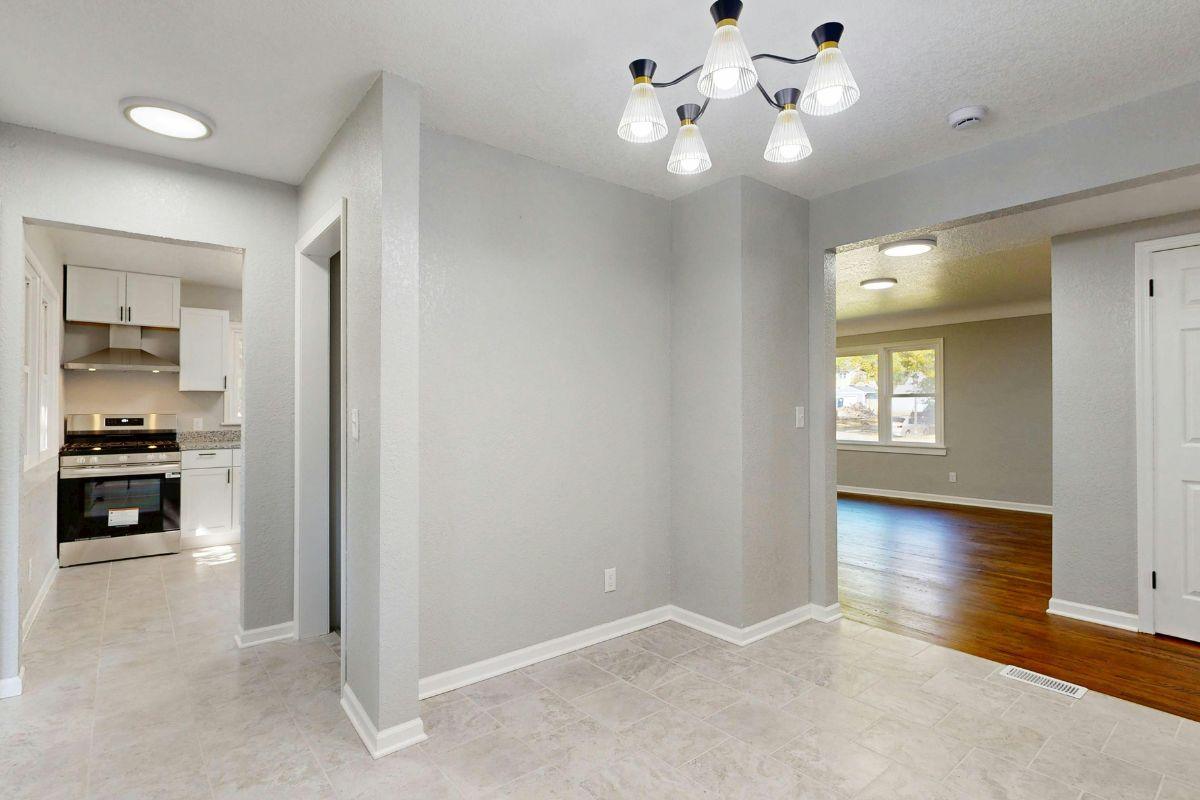
Several structural factors have pushed the levelling layer further into the standard renovation specification. Engineered wood flooring has grown as a share of the market, and engineered wood is less forgiving of substrate variation than traditional solid board. Large-format porcelain tile has become the default for kitchen and bathroom refurbishments, and large-format tile cracks over the smallest dips in the subfloor. Underfloor heating is now specified more often than not in new kitchen installations, and underfloor heating requires an engineered substrate it can sit on without stressing.
Each of these product trends has pushed the levelling step from optional to effectively mandatory. The flooring contractor who tries to lay a modern finish over an unprepared substrate increasingly finds that the warranty on their work does not survive the attempt.
What The Builders’ Merchants Are Reporting
The clearest independent read on the shift comes from the trade supply chain. The Builders Merchants Federation publishes the Builders Merchants Building Index each quarter, tracking value, volume and price across major product categories sold through the merchant network. Categories related to flooring preparation have shown consistent growth over recent reporting periods, running ahead of landscaping and timber lines in the merchant mix.
Builders’ merchants themselves describe the shift in plain terms. Levelling compound used to appear almost entirely on commercial invoices. It now appears regularly on orders for extensions, kitchen refits, and loft conversions. The product category has stopped being a specialist line item and started being a standard one.
What UK Homeowners Now Expect
The expectations of UK renovation clients have shifted along the same curve. Fifteen years ago, a renovation was finished when the room looked finished. Today, a renovation is expected to still look finished after five years. The maintenance expectation has risen. The tolerance for a floor that fails inside its first warranty period has fallen.
The levelling layer is one of the quiet decisions that decides whether the floor meets that expectation or does not. The cost of the layer is modest. The cost of a floor that fails because the layer was skipped is the floor itself, plus the labour to lift and relay it.
Also Read: What Landlords Should Verify in Tenant Reference Checks
What This Says About The UK Renovation Market
The broader picture, as the Construction Products Association has argued in its recent forecasts, is that the UK renovation and repair sector is undergoing a quiet convergence with commercial construction standards. The products specified in a well-run office fit-out ten years ago are increasingly the products specified in a well-run kitchen refurbishment today. The gap between trade practice and domestic expectation has closed.
The materials under the floor are not the sort of thing that sells magazine covers. But the UK renovation market has steadily been reorganising itself around them, and the finished rooms coming out of the better projects are visibly the better for it.