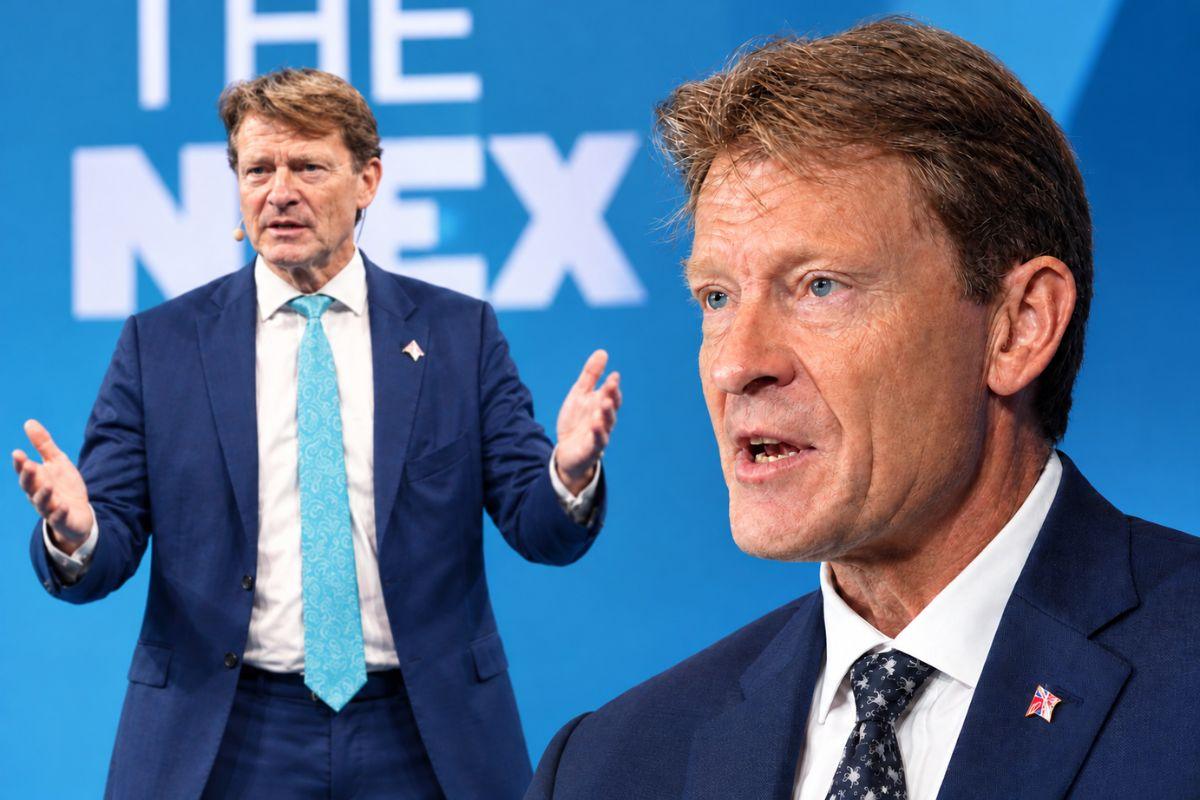
Richard Tice is a British property investor and the Reform UK MP for Boston and Skegness. His fortune is widely estimated at £40 million, built across a 35-year career in commercial property. His firm Quidnet Reit owns £31.9 million of property and carries a net worth of £17.5 million.
- Born 13 September 1964 in Farnham, Surrey, and grandson of developer Bernard Sunley.
- Spent 14 years as joint chief executive of the family firm, the Sunley Group.
- Ran CLS Holdings from 2010 to 2014, overseeing over £1 billion of assets.
- Now chief executive of Quidnet Capital, a Mayfair firm handling about £500 million of real estate.
- Loaned Reform UK £1.4 million, roughly 80% of the party’s funding, while he led it.
Who Is Richard Tice?
Richard James Sunley Tice was elected MP for Boston and Skegness in July 2024. He has been deputy leader of Reform UK since that summer and has served as the party’s business, trade and energy spokesperson since February 2026.
Before that, he chaired the Brexit Party, sat as an MEP for the East of England, and led Reform UK from March 2021 until Nigel Farage returned in June 2024.
Also Read: Britons Could Save More With the UK Household Energy VAT Cut
Property Career That Built the Money
Tice was born into property. His grandfather, Bernard Sunley, was a major developer and opencast coal mine owner. Wikipedia records that Tice attended Uppingham School and then read construction economics and quantity surveying at the University of Salford.
In 1991, after four years at Developer London and Metropolitan, he joined the Sunley Group as joint chief executive. Over 15 years, as The Telegraph has detailed, the firm bought more than 100 sites and built thousands of homes. It then sold nearly all its property and repaid shareholders in 2006, just before the crash.
A spell as a debt adviser followed. In 2010 he took over CLS Holdings, leading major planning applications in Vauxhall. He left his board in 2014 over a potential conflict of interest and became chief executive of Quidnet Capital Partners LLP.
Quidnet owns industrial warehouses near Newark and Northampton, plus sites in Derbyshire and Crawley.
What Richard Tice’s Net Worth Looks Like on Paper
There is no official valuation of his wealth. The £40 million figure circulated by outlets such as FM. is an estimate, not a filing.
The verified figures are firmer. The New World, reviewing the Commons Register of Members’ Financial Interests, found that Tice draws a “variable” £10,270 salary from Quidnet Reit. The same company owns £31.9 million in bricks and mortar, made a £1,237,249 profit on £2,370,428 in 2023, and has a net worth of £17.5 million. It is one of 16 ventures he declares.
Companies House filings later put its net assets at £33 million. The gap reflects different accounting dates.
On his website, Tice credits his record to “making the right judgement calls, knowing when to buy and sell… making the right decisions.”
He directs numerous other firms from one Berkeley Street address in Mayfair, including Bathurst Developments and Sunley Property LLP, run by seven-plus relatives.
The Offshore Questions
This is awkward for a party that promises to “stop the offshore taxpayer ripoff”.
The Good Law Project, with The Mirror’s investigations team, revealed Tice moved a million Quidnet Reit shares into a family trust while it sat in Jersey.
Tax expert Richard Murphy said, “There are only two reasons to use tax havens.” He added that nothing illegal had occurred but asked why an aspiring MP would “go about willingly undermining UK government tax revenues in this way”.
Tice replied that the trust had “been relocated to the UK” and that talk of lost revenue was “utter nonsense”. He said, “I have always been a UK taxpayer and paid normal UK tax on my worldwide earnings.”
A separate Jersey firm, Gellymill Ltd, has lent Quidnet Reit £125,000. Tice confirmed he controls it. In 2019, openDemocracy found two offshore companies had held shares in Sunley Family Limited since 1994.
Also Read: Sarah Pochin’s Secret Recording: What ITV’s Undercover Footage Reveals About Women Inside Reform UK
Tax Rows and Standards Referrals
In March 2026, The Sunday Times reported Tice had avoided nearly £600,000 in corporation tax through his property company. Labour chair Anna Turley asked HMRC to investigate, calling it a “deeply troubling case which needs to be investigated with the utmost urgency”.
Tice rejected that framing. Writing on X, as HuffPost UK noted, he said, “I must thank the Sunday Times and Dan Neidle for their detailed article confirming that my tax planning was entirely legitimate.”
An April 2026 report said a Tice-founded company failed to pay roughly £91,000 in tax before paying dividends to him and his offshore trust. He called it a “technicality”. Reform’s Zia Yusuf described it as “a minor administrative error”.
In July 2026, Liberal Democrat MP Lisa Smart referred him to the parliamentary standards commissioner over an undeclared £80,000 loan. The commissioner rejected it on 30 July. A further inquiry was reported in August.
£1.4 Million That Kept Reform Alive
His money did not just fund a lifestyle. It funded a party.
Tice loaned Reform UK £1.4 million across three years. Byline Times found a director’s loan of £1,083,000 in both 2022 and 2023, interest-free with no repayment date. The party was technically insolvent, holding negative net assets despite a small 2023 profit.
Then £200,000 was repaid to Tice on 10 June 2024, one week after Farage replaced him as leader. Labour peer Prem Sikka, an emeritus accounting professor, said, “Reform UK is technically insolvent and survives because it is bankrolled by loans from Richard Tice.”
His firm Tisum Investments added loans of £10,000 to £50,000. Britain Means Business put in £150,000. Tisun Investments bought a Hartlepool office outright for £110,000 in December 2022.
Tice is blunt about it. “There would be no Reform if I hadn’t put my money where my mouth is,” he said.
Why the Money Shapes the Politics
His earlier giving followed the same pattern. He donated £1,750 to David Davis in 2001, £38,000 to Grassroots Out, and just short of £1 million to the Brexit Party after the 2019 election.
DeSmog has tracked how his commercial outlook feeds his policy, from scrapping net zero to backing shale gas. In February 2026, he proposed merging local government pension schemes into a £500 billion sovereign wealth fund.
He won Boston and Skegness with 15,520 votes, a 38.4% share and a majority of 2,010. The property money got him into the room. The voters kept him there.
Also Read: UK Pension Withdrawal Rules Changing in 2027 and 2028: What Happens to Your Money?
Frequently Asked Questions
What is Richard Tice’s net worth?
Ans: Estimates place it near £40 million, though no official figure exists. Filings show his main property firm holds £31.9 million in assets.
How did Richard Tice make his money?
Ans: Through commercial property for over 35 years. He led the Sunley Group, then CLS Holdings, and now Quidnet Capital.
Is Richard Tice from a wealthy family?
Ans: Yes. His grandfather Bernard Sunley was a major property developer. Tice has said his father “had little money and gave me not a penny”.
How much has Richard Tice given Reform UK?
Ans: He loaned it £1.4 million, about 80% of its funding, while he led the party. Reform repaid £200,000 in June 2024.
Does Richard Tice use offshore structures?
Ans: He has. He moved a million shares into a Jersey-based family trust, which he says is now in the UK.
What does Richard Tice earn from his business?
Ans: He draws a variable £10,270 salary from Quidnet Reit, on top of his MP’s pay, and declares interests in 16 commercial ventures.
Sources & References
- The New World – Reviewing the Commons Register of Members’ Financial Interests, found that Tice draws a “variable” £10,270 salary from Quidnet Reit.
- Good Law Project – The Mirror’s investigations team revealed Tice moved a million Quidnet Reit shares into a family trust while it sat in Jersey.