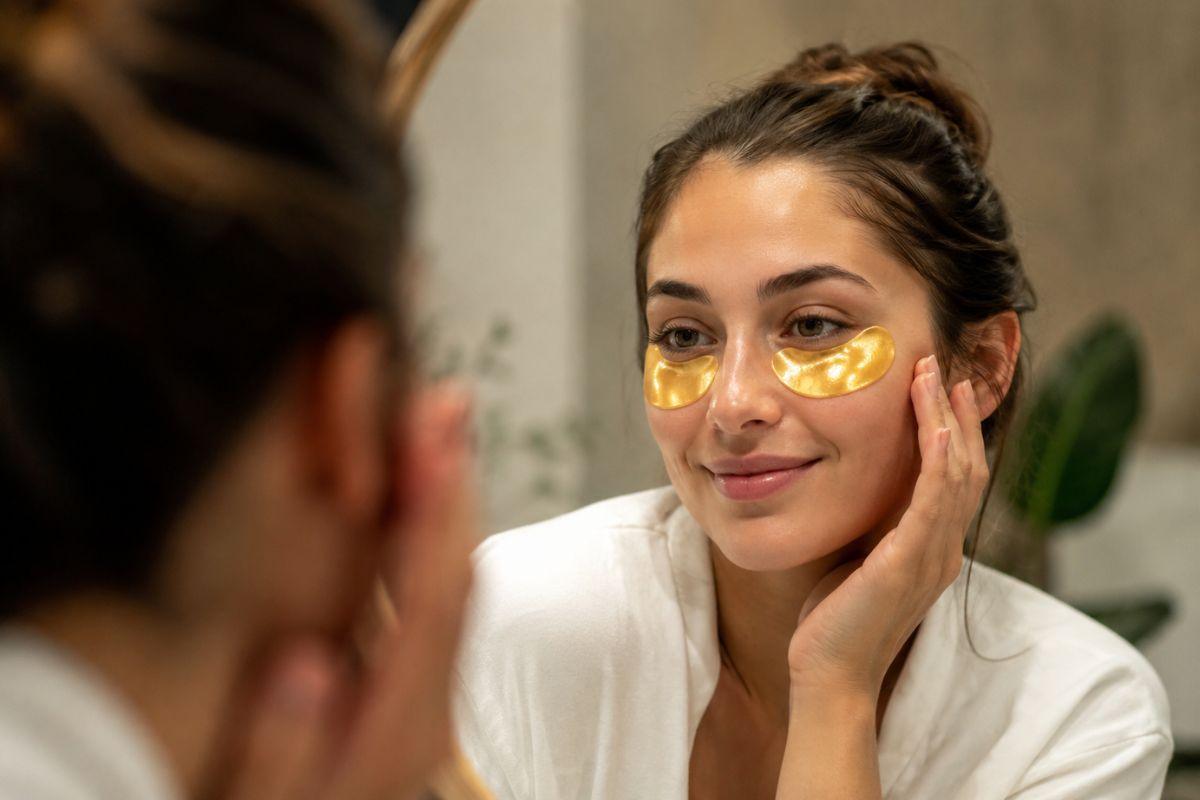
Eye patches refresh the under-eye area by combining a hydrating, ingredient-rich gel with light physical pressure. Left on for 10–20 minutes, they cool the skin, temporarily constrict blood vessels to reduce puffiness, and flood the surface with hydration and brightening actives like caffeine, hyaluronic acid, and vitamin C — leaving eyes looking more awake almost immediately. The effect is temporary, not corrective, so patches work best as a quick reset before an event or a weekly ritual alongside your regular eye cream.
- Speed matters here: most patches show a visible difference in puffiness and tone within 10–20 minutes.
- The material does real work: hydrogel and biocellulose patches hold onto moisture and actives far better than plain sheet masks, so the ingredients actually sink in instead of evaporating.
- Ingredients should match your concern: caffeine and green tea for puffiness, vitamin C and niacinamide for dullness or brown tone, peptides for firmness, hyaluronic acid for dehydration lines.
- Cold storage boosts the de-puffing effect — the chill does almost as much work as the formula for morning puffiness.
- Patches are a booster, not a replacement for a daily eye cream or sunscreen; think of them as the occasional deep-clean, not the everyday routine.
- Overuse can backfire on very sensitive or reactive under-eye skin, especially with strong actives like retinol or high-percentage acids.
Why the Under-Eye Area Looks Tired First
The skin under your eyes is roughly ten times thinner than skin on the rest of your face, has very few oil glands, and sits directly over a shallow layer of blood vessels and fat pads. That combination means three things show up here before anywhere else: fluid buildup (puffiness), visible blood vessels (that blue-purple tint), and dehydration lines. Poor sleep, salty food, allergies, screen time, and simple genetics can all push fluid into this area overnight, which is exactly why the “tired eye” look often has nothing to do with how tired you actually are.
Because the skin is thin and low on natural oil, it also loses moisture faster than the rest of your face. That’s the gap eye patches are built to fill.
Also Read: Does Eating Late at Night Cause Weight Gain?
What’s Actually Happening Under the Patch
An eye patch isn’t just a small sheet mask — it’s a delivery system. Three things happen at once when you wear one:
- Occlusion. The patch material forms a seal over the skin, trapping the serum against it instead of letting it evaporate into the air. This “greenhouse effect” pushes far more of the active ingredients into the skin than if you’d just patted a serum on and let it sit uncovered.
- Temperature. Cool patches (straight from the fridge or a chilled patch by design) cause the surface blood vessels to tighten slightly. Less blood pooling near the surface means less visible puffiness and less of that bluish cast.
- Gentle pressure and contour. A well-shaped patch sits flush against the curve of the orbital bone, which encourages lymphatic fluid to move rather than sit still under the eye.
None of this changes the structure of your skin permanently. It’s a temporary, visible reset — closer to a quick workout for your face than a treatment plan.
Choosing the Right Patch for Your Concern
Not every under-eye issue is the same, so not every patch will solve yours. It helps to know what you’re actually dealing with before you shop.
If your under-eyes look puffy or swollen
Look for caffeine, green tea extract, or centella asiatica. These help tighten the surface and calm inflammation. Store the patches in the fridge before use — the added cold does a lot of the heavy lifting.
If your under-eyes look bluish or purple
This is usually a circulation issue caused by thin skin showing the vessels underneath. Caffeine and peptides that support skin thickness over time can help, alongside cold application in the short term.
If your under-eyes look brown or dull
This is more about pigment. Vitamin C, niacinamide, and tranexamic acid are the ingredients worth checking the label for, since they work on melanin production and surface brightness rather than swelling.
If your under-eyes look creased or dehydrated
Hyaluronic acid and glycerin-based formulas plump the area with water, which softens the look of fine dehydration lines within minutes.
Many people have a mix of two or three of these at once — which is why multi-ingredient patches tend to be the most popular option rather than single-active ones.
Also Read: Pillow for Neck Pain: How to Pick One That Actually Helps
Materials Matter as Much as the Formula
The patch material decides how well the serum actually reaches your skin.
- Hydrogel — a jelly-like, water-based material that molds closely to the curve under the eye. It holds a large amount of serum and releases it slowly, and it feels noticeably cool going on.
- Biocellulose — a fermented, ultra-thin material (originally developed for wound care) that clings almost invisibly and delivers serum efficiently, though it can be pricier.
- Fabric or cotton sheet — more breathable but dries out faster, so serum absorption tends to be quicker but less intense.
If de-puffing and hydration are your main goals, hydrogel or biocellulose will generally outperform a basic fabric patch.
How to Use Eye Patches for the Best Quick Refresh
- Start with a clean, dry face. Any leftover moisturizer or oil under the eye can stop the patch from sticking properly and reduce absorption.
- Chill them if puffiness is the priority. Ten to fifteen minutes in the fridge (check the packaging first) intensifies the de-puffing effect.
- Position from the inner corner outward, following the curve of the bone rather than the muscle, and press gently so there are no air bubbles.
- Leave them on for 10–20 minutes — check your specific product, since over-wearing thin patches until they dry out can actually pull moisture back out of your skin.
- Pat in the leftover serum when you remove the patches instead of wiping it away; there’s usually product left that’s worth working in.
- Follow with your regular eye cream to seal in the hydration, and finish with SPF if it’s daytime.
Also Read: High Cheekbones: Why They’re Considered So Attractive
Morning vs. Night: Does Timing Change the Result?
Morning use is about damage control — reducing overnight puffiness and creating a smoother, cooler base before makeup. A short 10-minute chilled session works well here.
Night use is more about delivery — giving actives like peptides or vitamin C longer, undisturbed contact with the skin as part of a slower routine, often for 15–20 minutes while you do the rest of your skincare.
Neither is objectively better; it depends on whether you’re solving a same-day puffiness problem or building brightness and firmness over weeks.
Common Mistakes That Reduce the Effect
- Applying over moisturizer or oil. It creates a barrier that stops the patch from sticking or absorbing properly.
- Leaving patches on too long. Past the point where the gel starts to dry, patches can reverse their job and start drawing moisture out of the skin instead of in.
- Using strong actives daily. Retinol or high-percentage vitamin C patches are meant for occasional use — daily wear on this delicate skin often leads to redness or flaking rather than faster results.
- Skipping the patting-in step. Rubbing or wiping away leftover serum wastes a good portion of the product.
- Expecting a permanent fix. Patches manage the daily, temporary causes of tired-looking eyes — fluid, dehydration, dullness — not the structural or genetic causes of dark circles.
Who Should Be Cautious
Anyone with very reactive or sensitized under-eye skin, active eczema near the eyes, or a known sensitivity to fragrance or specific actives should patch-test on the inner arm first and choose fragrance-free, minimal-ingredient formulas. If irritation, itching, or unusual swelling shows up after use, discontinue and consult a dermatologist rather than continuing to experiment with formulas.
The Bottom Line
Eye patches won’t rewrite your skin’s biology, but for the specific, common causes of a tired look — overnight fluid, dehydration, dullness — they’re one of the fastest visible fixes available. Matching the ingredient to your actual concern, choosing a material that holds onto the serum, and using them consistently (not necessarily daily) is what separates a patch that just feels nice from one that actually changes how your eyes look.
Also Read: Hack Squat vs Leg Press: Which One Actually Builds Bigger Legs?
Frequently Asked Questions
Do eye patches actually work, or is it just a placebo?
They do work for temporary concerns — puffiness, dehydration, and dullness — because the occlusion and cooling effect are measurable, not just a sensory trick. What they don’t do is fix genetic or structural dark circles permanently.
How long should I leave eye patches on?
Most formulas are designed for 10–20 minutes. Leaving them on well past that point, especially once the gel feels dry, can pull moisture out of the skin instead of adding to it.
Can I use eye patches every day?
Patches with gentle, hydrating ingredients (hyaluronic acid, centella) are generally fine for frequent use. Patches with strong actives like retinol or high-strength vitamin C are better used two to three times a week to avoid irritation.
Should I store eye patches in the fridge?
If your main goal is reducing morning puffiness, yes — the cold significantly boosts the de-puffing effect. If you’re using them mainly for hydration or brightening overnight, room temperature is fine.
What ingredients should I avoid under my eyes?
High-concentration exfoliating acids and strong retinol formulations are usually too harsh for this thin, sensitive skin unless a product is specifically formulated and tested for the under-eye area.
Do I still need an eye cream if I use patches?
Yes. Patches are a concentrated, occasional treatment — closer to a face mask than a daily step. An eye cream provides the everyday hydration and protection your under-eyes need between patch sessions.
Can eye patches replace concealer or makeup prep?
They can help — reducing puffiness and adding hydration creates a smoother base that makeup sits on better — but they’re a skincare step, not a substitute for color-correcting or concealing pigment.
Sources & References
- Frontiers in Aging – Periorbital skin index as a biomarker for biological aging and health status
- NCBI/PMC – Clinical and Dermoscopic Evaluation of Periorbital Melanosis and Its Psychological Impact
- Clinics in Dermatology (Elsevier) – Treatment of Periorbital Vascularity, Erythema, and Hyperpigmentation
- NCBI/PMC – Topographic Analysis of the Periorbital Region Based on Ultrasonography
- TriPrinceton – Everyone’s Talking About: Hydrogel Eye Patches